Greek Mythology

Hippocampus

The Hippocampus (plural: Hippocampoi or Hippokampoi), also known as Hippocamp or Hippokampos in Greek mythology, is a mythological creature with the upper body of a horse and the lower body of a fish. The name “Hippocampus” comes from the Greek words “hippos” (ἵππος) meaning “horse” and “kampos” (κάμπος) meaning “sea monster.” These creatures were often associated with the sea god Poseidon (known as Neptune in Roman mythology) and played a significant role in ancient Greek seafaring culture.

Read more >

Hecatoncheires

The Hecatoncheires (also known as Hundred-Handers) are powerful and fearsome giants from Greek mythology, each with one hundred arms and fifty heads. Their name comes from the Greek words “hekaton” (ἑκατόν) meaning “hundred” and “cheir” (χείρ) meaning “hand.” They are considered primordial beings, born to the Titans Uranus (Sky) and Gaia (Earth). The Hecatoncheires played a crucial role in the early mythological stories, particularly during the Titanomachy, the great war between the Olympian gods and the Titans.

Read more >

Eurynomos

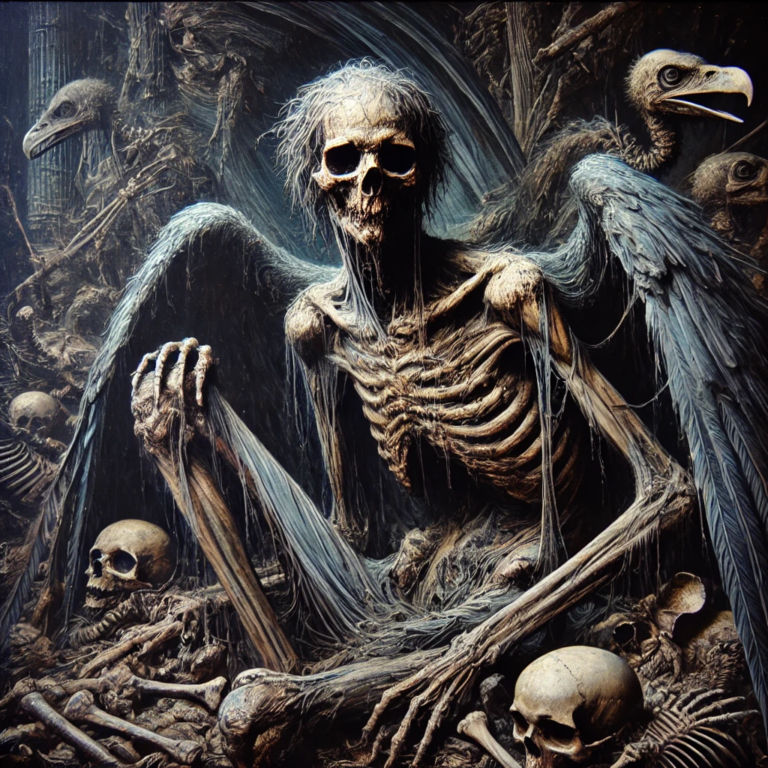
Eurynomos (also spelled Eurynomus or Eurynomos) is a relatively obscure figure from Greek mythology, known primarily as a demon of the underworld associated with decay and the consumption of corpses. Unlike more prominent figures like Hades or Charon, Eurynomos doesn’t have an extensive mythology, but his role is eerie and macabre, tied to the dark aspects of death and the afterlife.

Read more >

Introduction to Greek Mythology

Greek mythology refers to the rich collection of stories and legends passed down by the ancient Greeks, which explain the origins of the world, the lives of gods, and the adventures of heroes. These myths were a vital part of ancient Greek religion and culture and have had a profound influence on Western literature, art, and philosophy. Greek mythology is notable for its human-like gods, whose actions and emotions often mirrored those of people, and for its epic tales of heroism, morality, and the consequences of hubris.

Key Texts

TextDescription
The Iliad by HomerAn epic poem that tells the story of the Trojan War, focusing on the Greek hero Achilles. It explores themes of honor, wrath, and fate, and provides insight into the interactions between gods and mortals.
The Odyssey by HomerThe sequel to The Iliad, this epic follows the journey of Odysseus as he returns home from the Trojan War. Along the way, he encounters various mythical creatures and gods.
Theogony by HesiodA foundational text that details the genealogy of the Greek gods, beginning with the primordial entities and leading to the rise of Zeus and the Olympian gods.
Metamorphoses by OvidA Roman poem that compiles various Greek and Roman myths, particularly focusing on transformations of gods, mortals, and nature.

Important Characters

CharacterDescription
ZeusThe king of the Olympian gods, Zeus is the god of the sky, thunder, and justice. He overthrew the Titans to establish his rule over Mount Olympus.
HeraThe queen of the gods and the wife of Zeus, Hera is the goddess of marriage and childbirth. She is known for her jealousy and her role in punishing Zeus’s lovers and their children.
AthenaThe goddess of wisdom, war, and craft, Athena was born from the head of Zeus. She is a symbol of rational warfare and protector of heroes like Odysseus.
PoseidonThe god of the sea, earthquakes, and horses. Poseidon is one of the most powerful Olympians, known for his temper and his role in controlling the waters.
ApolloThe god of the sun, music, prophecy, and healing, Apollo is one of the most complex deities in Greek mythology. He is associated with both creative arts and rationality.
HadesThe god of the underworld, Hades rules over the realm of the dead. Unlike other gods, he rarely leaves his domain and is more concerned with maintaining balance than interacting with mortals.

Significant Places

  • Mount Olympus: The home of the Olympian gods, where they rule over the world of mortals and immortals alike. Olympus is depicted as a majestic place above the clouds.
  • The Underworld: Ruled by Hades, the Greek underworld is where souls of the dead reside. It includes regions like Elysium (a paradise for the righteous) and Tartarus (a place of torment for the wicked).
  • Delphi: A sacred site dedicated to Apollo, where the Oracle of Delphi would deliver prophecies from the gods. Delphi was considered the center of the world in ancient Greek belief.
  • Troy: The city that was the setting for the Trojan War, one of the most famous events in Greek mythology. Its fall is central to many myths and epic poems.

Mythical Creatures

CreatureDescription
MinotaurA creature with the body of a man and the head of a bull. The Minotaur was imprisoned in the Labyrinth on Crete and fed on human sacrifices until it was slain by the hero Theseus.
MedusaA Gorgon with snakes for hair, Medusa could turn anyone who looked directly at her to stone. She was ultimately killed by the hero Perseus.
CerberusThe three-headed dog that guards the entrance to the underworld. Cerberus prevents the dead from leaving and the living from entering without permission.
CyclopsGiant beings with a single eye in the middle of their foreheads. The most famous Cyclops, Polyphemus, appears in The Odyssey, where he is blinded by Odysseus.
ChimeraA fire-breathing monster with the body of a lion, the head of a goat, and a snake for a tail. The Chimera was killed by the hero Bellerophon.

Mythological Themes

  • Fate and Free Will: A recurring theme in Greek mythology is the tension between fate, as decreed by the gods, and free will. Many myths explore how individuals, despite their choices, are unable to escape their destiny.
  • Hubris: Excessive pride or arrogance, known as hubris, often leads to the downfall of both mortals and gods in Greek myths. Figures like Icarus, who flew too close to the sun, and Narcissus, who fell in love with his own reflection, illustrate the dangers of hubris.
  • Heroism: The concept of heroism is central to Greek mythology, with many stories focusing on the bravery, strength, and intelligence of heroes like Hercules, Theseus, and Achilles as they face great challenges.
  • The Interaction of Gods and Mortals: Greek mythology frequently explores the relationships between gods and humans, from gods aiding heroes like Athena helping Odysseus, to gods punishing mortals for disrespect or hubris.