Delving into the rich tapestry of Inuit mythology, I discovered the enigmatic Ijiraq. These mysterious beings are renowned for their ability to shapeshift, often leading travellers astray in the vast Arctic landscapes.
As I explored their stories, I realised the Ijiraq embody the unpredictable spirit of nature. Their tales not only captivate but also teach valuable lessons about respect and awareness in harsh environments.


Join me as we uncover the legends surrounding the Ijiraq, exploring their origins and the enduring impact they have on Inuit culture today.
Origins and History
The Ijiraq originate from Inuit mythology, deeply rooted in Arctic traditions. Their history reflects the resilience and adaptation of Inuit culture to the harsh Arctic environment.
Mythological Background
Ijiraq feature prominently in Inuit folklore as shapeshifters. They possess the ability to transform into animals or natural elements, confusing travellers in the Arctic. Legends describe Ijiraq as both mischievous and protective spirits. Their presence symbolizes the unpredictable forces of nature encountered by the Inuit people.


Cultural Significance
Ijiraq embody the Inuit understanding of the environment’s challenges. They teach the importance of respect and caution in the Arctic. Stories of Ijiraq are used to convey moral lessons and survival skills. Additionally, Ijiraq influence contemporary Inuit art and storytelling, maintaining their relevance in modern culture.
Characteristics and Abilities
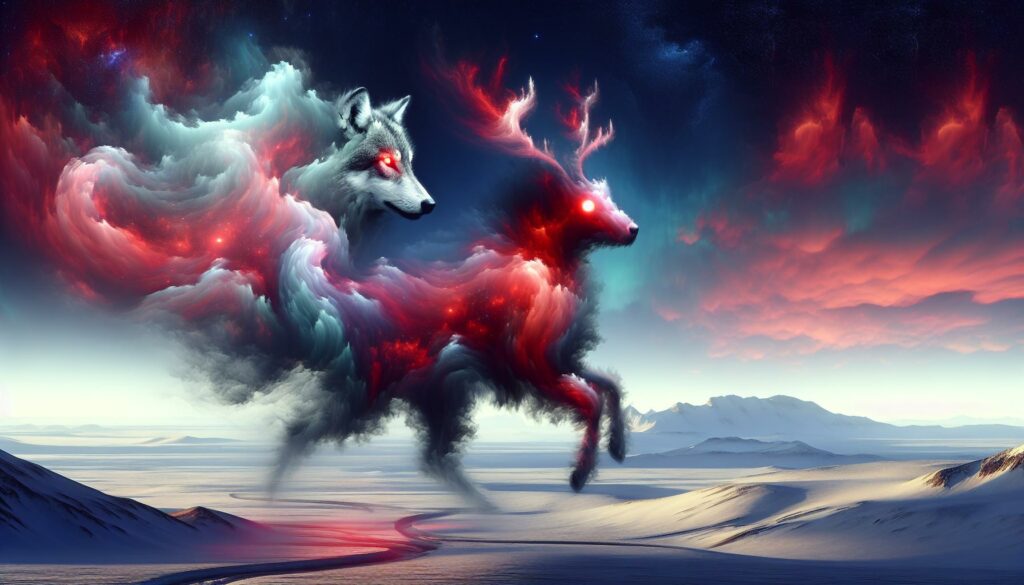
The Ijiraq embodies the mysterious and formidable aspects of Inuit mythology. Its unique traits and powers highlight its role in Arctic folklore.
Shape-Shifting Powers
The Ijiraq masterfully shapeshifts, transitioning seamlessly between human and animal forms. It can assume shapes of wolves, bears, reindeer, ravens, and even humans. This ability confuses travellers, making the Ijiraq elusive and unpredictable. Its transformations maintain glowing red eyes, a constant feature that reveals its true nature regardless of its disguise.
Behaviour and Folklore
In folklore, the Ijiraq is a shadowy figure that blends into the Arctic landscape, evading capture and detection. It often leads travellers astray, symbolising the unpredictable forces of nature. Stories depict the Ijiraq as both mischievous and protective, reflecting the duality of natural challenges faced by the Inuit. Its elusive behaviour teaches respect and caution, emphasizing the importance of awareness in harsh environments.
Ijiraq in Modern Culture

The Ijiraq continues to shape contemporary Inuit expression, embodying the mysterious and unexplored aspects of the Arctic.
Representation in Literature
Ijiraq prominently features in modern Inuit literature, symbolizing the unknown and the challenges of Arctic life. Authors integrate the Ijiraq’s shapeshifting abilities and elusive nature to explore themes of identity, resilience, and survival. For example, in [Author’s Work], the Ijiraq represents the unpredictable forces that Inuit communities navigate daily. These literary portrayals preserve traditional beliefs while addressing current societal issues.
Appearance in Media
The Ijiraq’s influence extends to various media, enhancing the portrayal of Inuit mythology. In visual arts, contemporary Inuit artists depict the Ijiraq through sculptures and paintings, highlighting its transformative forms and supernatural qualities. Additionally, documentaries and educational programmes feature the Ijiraq to educate broader audiences about Inuit culture and folklore. These media representations ensure the Ijiraq remains a vibrant and relevant symbol in today’s society.
Symbolism and Interpretations
Transformation and Mystery
I find the Ijiraq’s shape-shifting abilities fascinating, as it transforms into Arctic animals like caribou, foxes, owls, and humans. This power symbolizes transformation and mystery, highlighting the creature’s elusive nature. Its capacity to change forms reflects the unpredictable Arctic environment and the hidden facets of nature.
Danger and Deception
The Ijiraq often kidnaps children, embodying danger and deception. Its skill in disguise and stealth underscores its role as a trickster. This portrayal serves as a warning of real threats in the Arctic, emphasizing the importance of vigilance and caution when traversing the harsh landscape.
Connection to the Arctic Environment
The Ijiraq’s extensive knowledge of the Arctic terrain underscores the necessity of respecting the land. By disorienting travellers, it emphasizes the need for awareness and adaptability in extreme conditions. This connection reinforces Inuit cultural values of survival and harmony with nature.
Key Takeaways
- Deep Roots in Inuit Mythology: Ijiraq originate from Inuit traditions, embodying the resilience and adaptability of Arctic cultures.
- Shapeshifting Abilities: Renowned for transforming into animals and natural elements, Ijiraq often lead travellers astray in the vast Arctic.
- Symbol of Nature’s Unpredictability: These mysterious beings represent the ever-changing and formidable spirit of the Arctic environment.
- Cultural Significance: Ijiraq stories teach valuable lessons about respect, caution, and survival in harsh conditions, influencing Inuit art and literature.
- Modern Representation: Continues to feature in contemporary media and storytelling, preserving traditional beliefs while highlighting current societal themes.
Conclusion
The Ijiraq remains a powerful symbol within Inuit culture, encapsulating the mysteries of the Arctic. Engaging with these legends has deepened my appreciation for the resilience and wisdom of the Inuit people. Their stories inspire a greater respect for nature and the challenges it presents. Exploring the Ijiraq has been a fascinating journey into a rich cultural heritage that continues to thrive today, highlighting the enduring connection between the Inuit and their environment.
Frequently Asked Questions
What is the Ijiraq in Inuit mythology?
The Ijiraq is a mysterious shapeshifting being from Inuit mythology. Known for its ability to transform into animals or natural elements, the Ijiraq often leads travellers astray in the Arctic. It symbolizes the unpredictable nature of the Arctic environment and serves as a guardian of traditional knowledge, embodying both the challenges and the resilience of Inuit culture.
What abilities does the Ijiraq possess?
The Ijiraq can transform between human and various animal forms, such as wolves, bears, caribou, foxes, and owls. Its shape-shifting ability makes it elusive and difficult to track. Additionally, the Ijiraq is known for its glowing red eyes and mastery of the Arctic landscape, which it uses to confuse and mislead travellers, reflecting the harsh and ever-changing conditions of the Arctic.
How does the Ijiraq influence contemporary Inuit culture?
Today, the Ijiraq remains a significant symbol in Inuit culture, inspiring contemporary Inuit literature, art, and storytelling. It represents themes of identity, resilience, and survival, while also preserving traditional beliefs. Artists depict the Ijiraq in sculptures and paintings, and modern narratives use its legend to address current societal issues, ensuring its relevance in modern Inuit expression.
What do Ijiraq legends teach about the Arctic environment?
Ijiraq legends emphasise the importance of respect and awareness in navigating the Arctic’s harsh conditions. They teach moral lessons and survival skills, highlighting the need to understand and honour the land. By portraying the Ijiraq as both protective and mischievous, these stories reinforce the Inuit values of resilience and harmony with nature, essential for survival in the challenging Arctic environment.
How is the Ijiraq portrayed in modern media?
In modern media, the Ijiraq is featured in Inuit literature, art, and documentaries. Authors use its shapeshifting abilities to explore complex themes, while artists capture its mysterious and elusive nature in visual forms. Documentaries educate wider audiences about Inuit folklore, showcasing the Ijiraq’s role in cultural heritage and its ongoing influence on contemporary storytelling and artistic expression.
Why are the Ijiraq considered both mischievous and protective?
The dual nature of the Ijiraq as both mischievous and protective reflects the Inuit understanding of the Arctic’s unpredictable forces. While it may lead travellers astray or play tricks, it also serves as a guardian of traditional knowledge and a symbol of survival. This balance illustrates the necessity of caution and respect in the environment, teaching valuable lessons about navigating and coexisting with nature’s challenges.