Too Long, Didn’t Read
- The earliest references to Selkie appear in the oldest surviving sources of European Folklore.
- Understanding Selkie requires understanding the world that created it.
- The cultural context matters because it shapes everything about how Selkie was understood.
- The central stories surrounding Selkie follow patterns common across European Folklore, but with details that are entirely unique to this figure.
Some figures in mythology refuse to stay buried in the past. Selkie is one of them. Across centuries of storytelling, through oral tradition, sacred texts, and the quiet persistence of cultural memory, this figure has endured. Not because the stories are simple, but because they speak to something that does not change: the questions humans ask when they stand at the edge of what they can understand.
To encounter Selkie in the traditions of European Folklore is to encounter a culture wrestling with forces larger than itself. The stories are not just entertainment. They are maps of meaning, drawn by people who needed to explain why the world works the way it does, why suffering exists, why power corrupts, and what happens when the boundary between the human and the divine grows thin.
Origins and Cultural Context
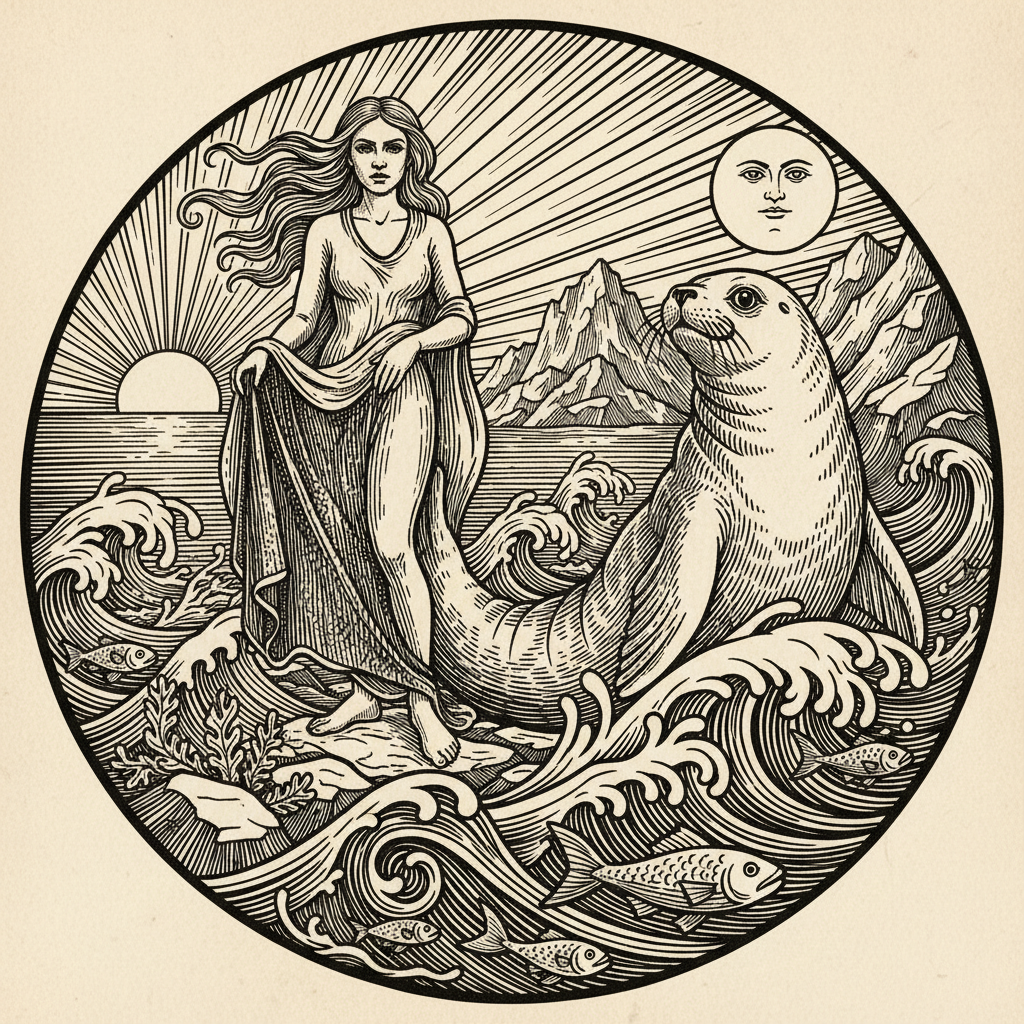
The earliest references to Selkie appear in the oldest surviving sources of European Folklore. These were not written as academic records. They were living stories, passed between generations, shaped by the needs of the communities that told them. Each retelling added new layers, new details, new interpretations. The figure we know today is the result of centuries of this process.
Understanding Selkie requires understanding the world that created it. This was a culture where the natural and supernatural were not separate categories. Rivers had spirits. Mountains had voices. The boundaries between the world of the living and the world beyond were understood to be permeable, crossable, and dangerous. Selkie exists precisely at this boundary.
The cultural context matters because it shapes everything about how Selkie was understood. In a world where every natural force was also a spiritual force, figures like Selkie were not metaphors. They were real presences that demanded respect, offering both protection and threat depending on how they were approached. The traditions surrounding Changeling reflect similar themes within European Folklore.
The Mythology of Selkie
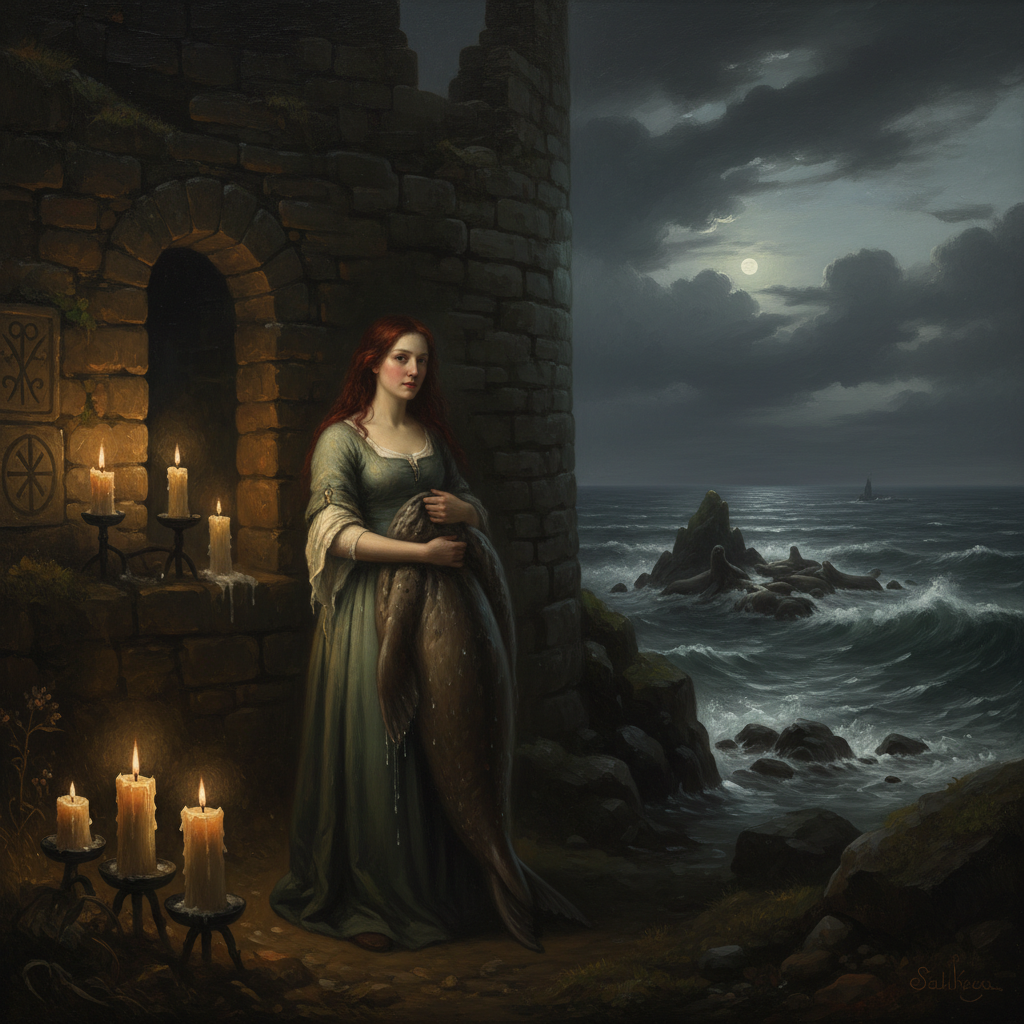
The central stories surrounding Selkie follow patterns common across European Folklore, but with details that are entirely unique to this figure. At the heart of the mythology is a tension between order and chaos, between the known world and the forces that threaten to unmake it.
Selkie appears in multiple narratives, sometimes as a protagonist, sometimes as an antagonist, sometimes as a force that defies easy classification. This multiplicity is not contradiction. It reflects the genuine complexity of the figure as understood by the culture that created it. A single story could never contain everything Selkie represents.
The most well-known accounts describe Selkie as a being of considerable power, operating within a web of relationships with other figures in the European Folklore tradition. These relationships, whether of alliance, rivalry, or kinship, define much of the mythology. The stories are rarely about Selkie alone. They are about what happens when powerful forces interact, and what the consequences mean for the world and the people in it.
What makes these narratives enduring is their refusal to simplify. Selkie is not purely good or purely evil. The figure exists in a moral landscape that is more complex than simple binaries allow. This complexity is what gives the mythology its power and its relevance across centuries.
Symbolism and Meaning
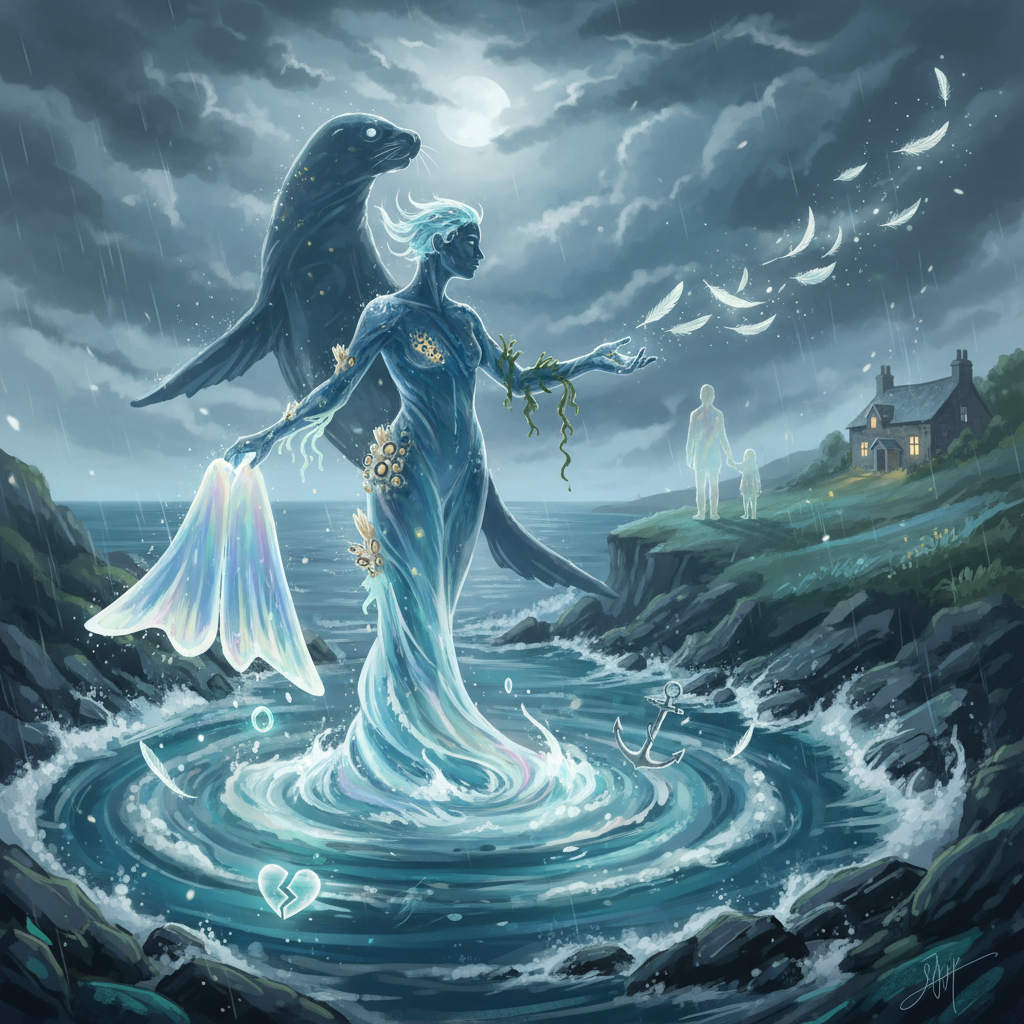
The symbolism of Selkie operates on multiple levels. On the surface, the stories provide explanations for natural phenomena, cultural practices, and social structures. Below the surface, they encode deeper truths about human psychology, the nature of power, and the relationship between individuals and the communities they belong to.
Power and responsibility. Many stories about Selkie explore what happens when power is wielded without wisdom, or when responsibility is abandoned. These are not abstract philosophical questions. They are practical concerns for any community, and the mythology encodes them in narrative form.
The boundary between worlds. Selkie frequently appears at thresholds, between the living and the dead, between the human and the divine, between the civilised and the wild. This liminal quality is central to the figure’s meaning. Selkie represents the moment of crossing, the point where one reality gives way to another.
Transformation and identity. Stories involving Selkie often deal with change, whether physical, spiritual, or social. The mythology asks what remains constant when everything else shifts, and whether identity is something fixed or something that must be continually remade.
Cross-Cultural Connections
The themes embodied by Selkie are not unique to European Folklore. Parallel figures appear across world mythology, each shaped by its own cultural context but addressing remarkably similar questions. This pattern suggests that the concerns Selkie represents are not culturally specific. They are human.
The specifics differ. The names change. The settings shift from one landscape to another. But the underlying structure, the questions about power, transformation, boundaries, and the relationship between mortals and the divine, these remain constant. Studying Selkie alongside its parallels in other traditions reveals the common threads that connect all human mythological thought.
Legacy and Modern Influence
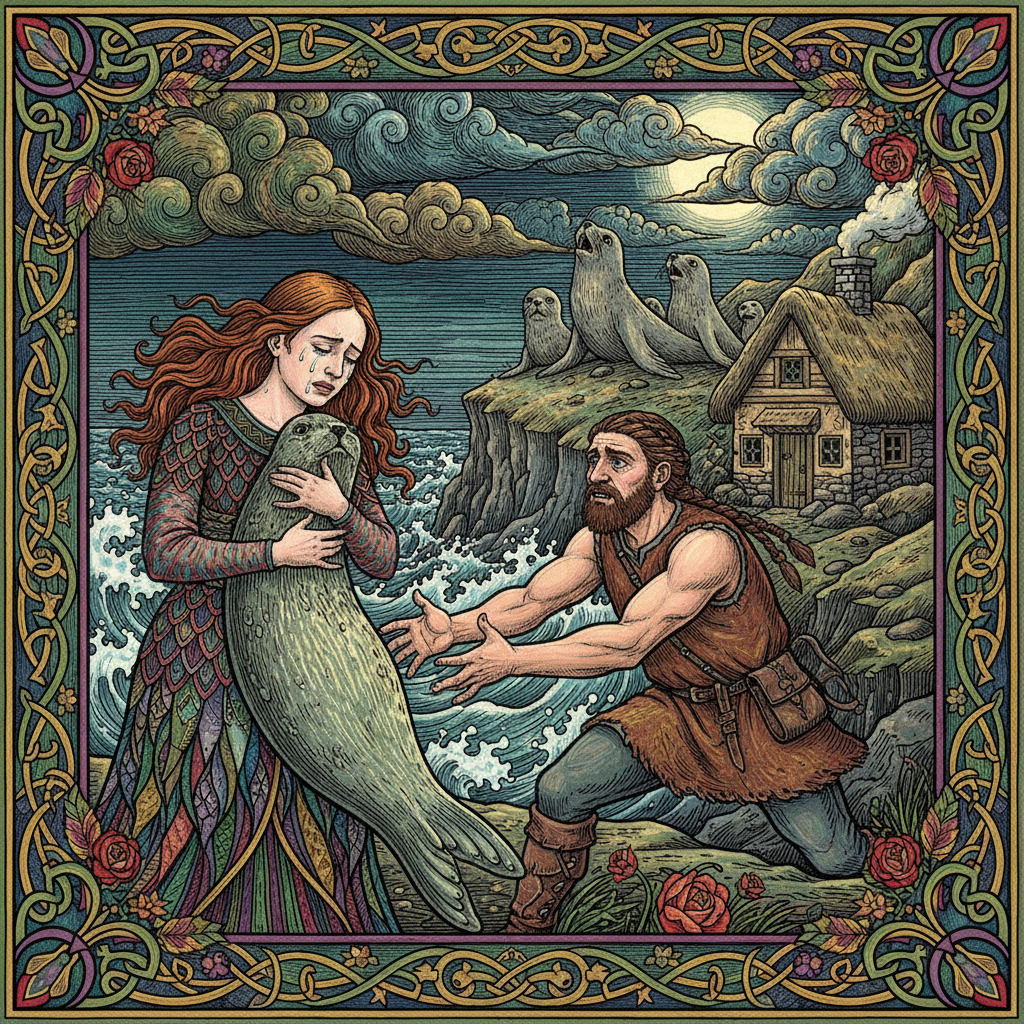
Selkie has not remained confined to ancient texts and oral traditions. The figure continues to appear in contemporary art, literature, film, and gaming, often reimagined for modern audiences but retaining the core elements that made the original mythology compelling.
This ongoing relevance is not accidental. The questions Selkie addresses, about power, identity, transformation, and the boundaries of the known world, are the same questions that preoccupy contemporary culture. The mythology provides a framework for thinking about these issues that is older, deeper, and often more honest than modern alternatives.
Whether encountered in a museum, a novel, a video game, or an academic text, Selkie continues to do what mythology has always done: hold up a mirror to human experience and ask difficult questions about what it reveals.
Mythology Delivered to Your Inbox
Join 25,000+ readers exploring myths, legends, and ancient stories from cultures around the world. New entries every week.
SubscribeFrequently Asked Questions
What is Selkie in European Folklore?
Selkie is a significant figure in European Folklore, appearing in ancient texts and oral traditions. The figure embodies themes of power, transformation, and the relationship between the human and supernatural worlds. Stories about Selkie have been told for centuries and continue to influence modern culture.
What does Selkie symbolise?
Selkie symbolises the tension between order and chaos, the boundary between the mortal and divine worlds, and the consequences of wielding power. The figure represents themes of transformation, responsibility, and the liminal spaces where different realities meet.
Where does Selkie appear in modern culture?
Selkie appears in contemporary literature, art, film, and video games. The figure has been reimagined by modern creators while retaining the core elements from European Folklore that make the original mythology compelling. Academic study of Selkie also continues across universities worldwide.
How does Selkie compare to similar figures in other mythologies?
Parallel figures appear across world mythology, each shaped by its own cultural context but addressing similar themes about power, transformation, and the boundary between worlds. While the specific details differ, the underlying concerns are remarkably consistent across traditions.
What are the main sources for stories about Selkie?
The primary sources include ancient texts, oral traditions, archaeological evidence, and cultural practices preserved within the European Folklore tradition. Many of these sources have been studied, translated, and interpreted by scholars, though oral traditions mean some versions exist only in living memory.