Quick Summary
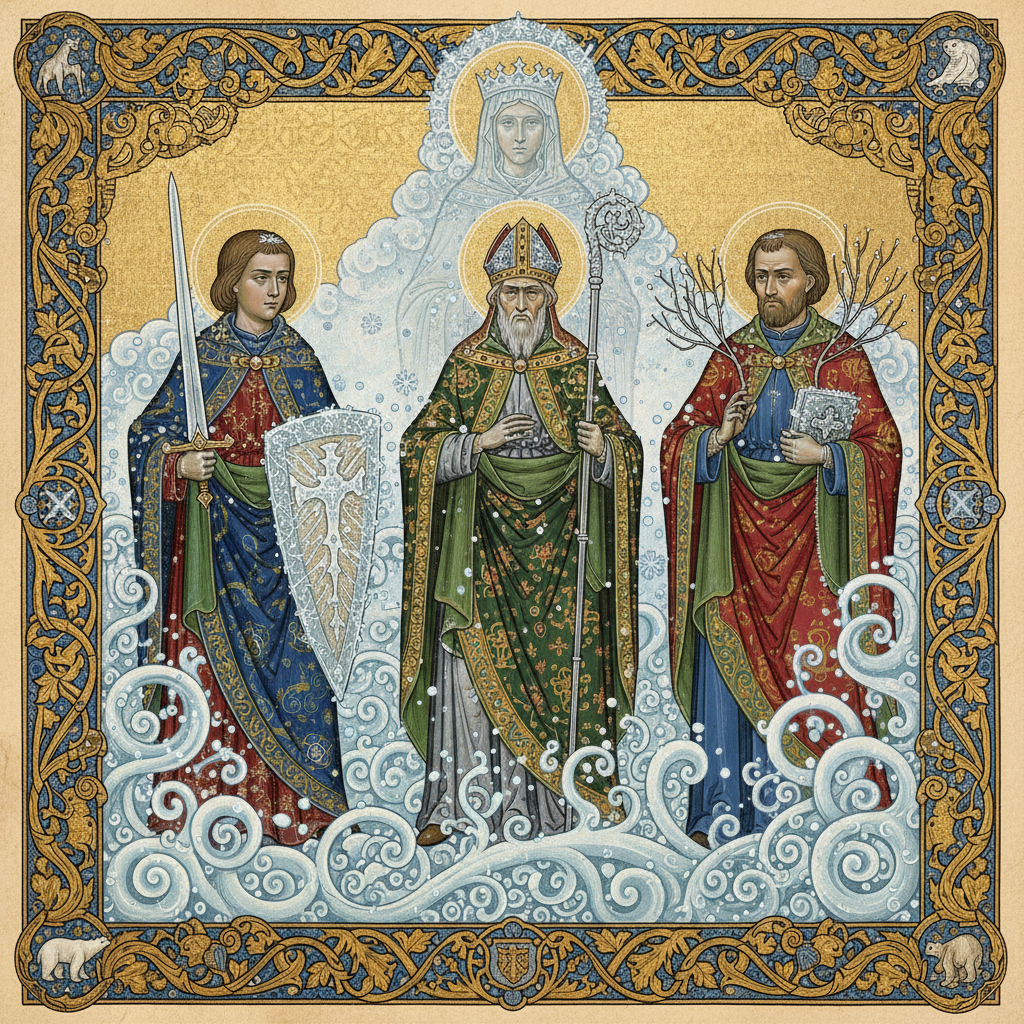
- The Three Ice Saints are Saints Pancratius, Servatius, and Bonifatius, whose feast days fall on 12, 13, and 14 May in the Catholic calendar.
- Central European folk tradition holds that these three days are likely to bring the last spring frost, so gardeners wait until after their feasts to plant tender crops.
- The tradition is followed in Germany, Austria, Switzerland, the Czech Republic, Slovakia, Poland, Hungary, and other parts of Central and Eastern Europe.
- A fourth saint, Sophia of Rome (15 May), is sometimes added as the “cold Sophia”, marking a final cold snap before reliable spring.
- The Ice Saints reflect a Christianisation of older pagan European observations about the climatic regularity of a mid-May cold spell.
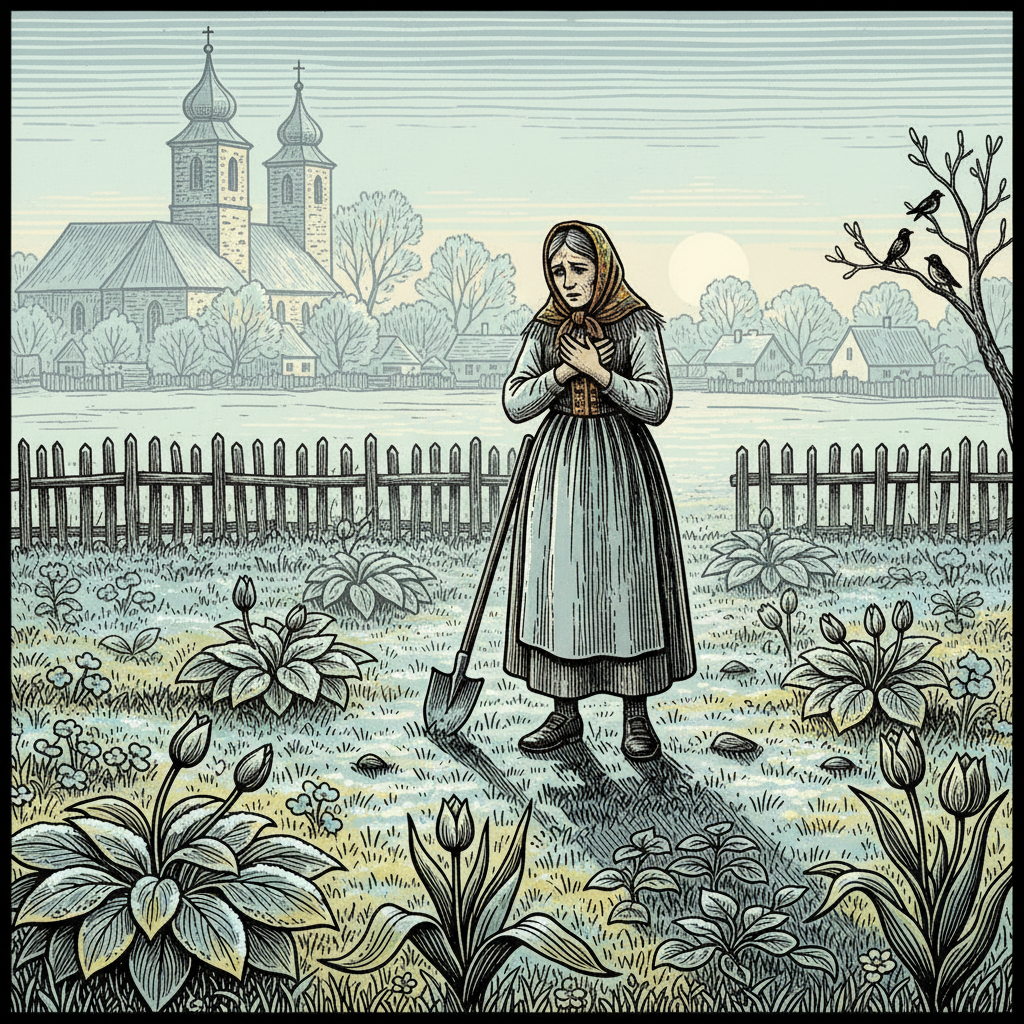
A gardener in Bavaria walks out to her vegetable patch in early May. The weather has been warm. The soil is workable. The early lettuces are already up. She does not plant her tomatoes. She does not plant her beans. She waits. Three days are still ahead, named after three saints, and tradition says the frost may come on any of them. Only after 15 May, after the cold Sophia has passed, will she trust the season. Her grandmother told her to wait. Her great-grandmother told her grandmother. Generations of gardeners across Central Europe have done the same thing.
The Three Ice Saints are one of the most peculiar surviving folk traditions of Europe: a meteorological observation woven into the Catholic calendar, observed by gardeners and farmers across half the continent, with measurable basis in actual climate data. They are not goddesses. They are not pagan deities. They are three Christian martyrs whose feast days happen to fall on a regular cold snap of late spring, and who therefore became the patron saints of the last frost.
Origins and Cultural Roots
The three Ice Saints are Saint Pancratius (Pancras), a 14-year-old Roman martyr killed around 304 CE; Saint Servatius, a 4th-century bishop of Tongeren in what is now Belgium; and Saint Bonifatius (Boniface) of Tarsus, another early Roman martyr. Their feast days were established in the Catholic calendar at 12, 13, and 14 May respectively. None of the three has any historical connection to weather or to ice.
The connection to cold weather is purely calendrical. By the late medieval period, gardeners across Central Europe had noticed that a regular cold spell tended to occur in mid-May, often bringing late frosts that could damage tender plants. The three feast days happened to coincide with this period. Folk tradition wove the saints into the climate, and so the three became the Ice Saints (German Eisheilige).
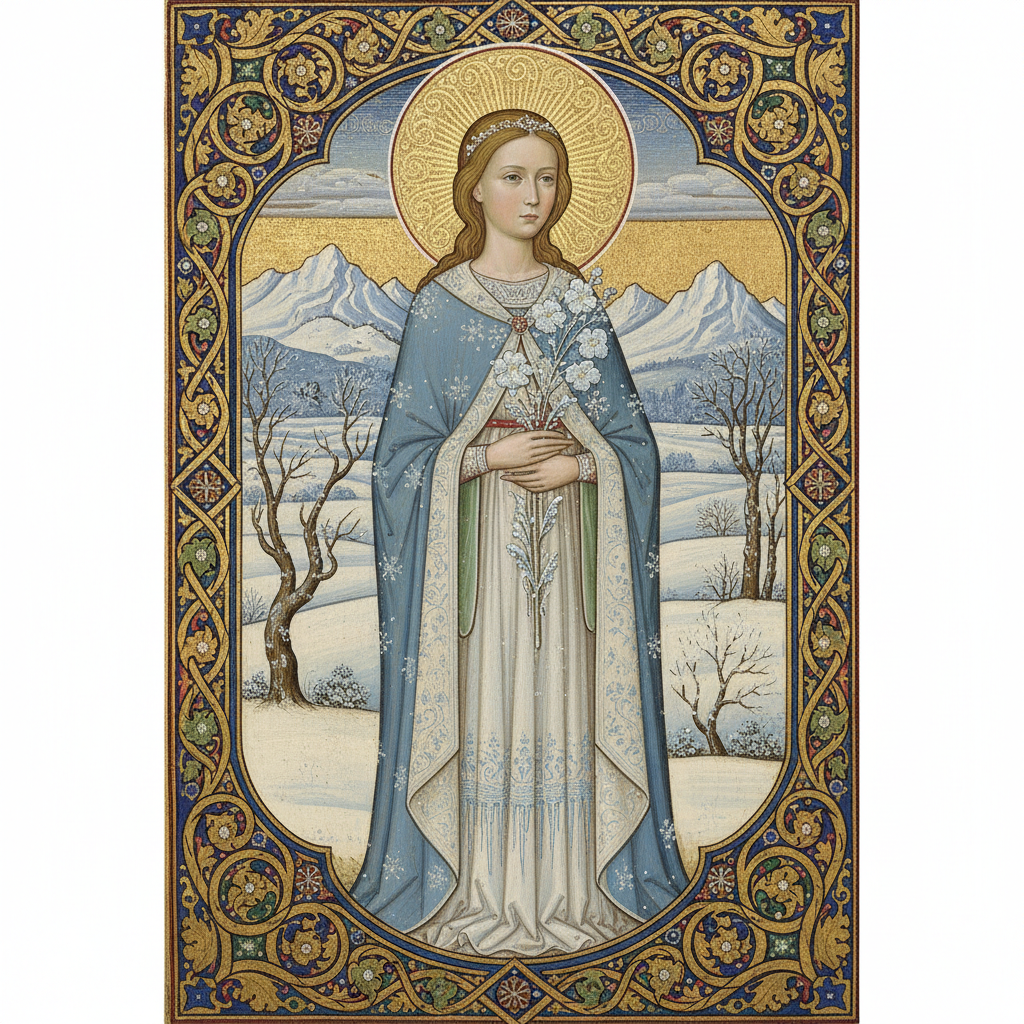
A fourth name is often added: Saint Sophia of Rome, whose feast day is 15 May. She is called Kalte Sophie in German, “the cold Sophia”, and her feast marks the formal end of frost danger. In some regional traditions, particularly in southern Germany and Austria, she is the most important of the four. After the cold Sophia, summer is allowed to begin.
The Climatic Pattern
The Ice Saints tradition is unusual among folk traditions in being demonstrably correlated with actual weather. Modern meteorological data from Central Europe shows a real, if modest, statistical tendency toward late frost in mid-May. The phenomenon is sometimes attributed to a regular incursion of cold polar air over Central Europe at this time of year, before the summer warming pattern is established.
The pattern is most pronounced in the continental climate zones of Central Europe and is less evident in maritime climates of Western Europe and Scandinavia. This explains why the Ice Saints tradition is strongest in Germany, Austria, the Czech Republic, Slovakia, Hungary, and Poland, and weaker in coastal France, Britain, or the Mediterranean.
Modern climate change has begun to shift the pattern. Some recent decades show fewer late frosts, while others show variable weather extending well past the traditional Ice Saints period. Gardeners adapt. Some now wait until later. Some plant earlier. The tradition itself remains, even as the climate it observed shifts.
The Three Saints
Saint Pancratius, sometimes called Saint Pancras, was according to tradition a young Phrygian Christian who was beheaded in Rome around 304 CE during the persecutions of the emperor Diocletian. He is said to have been only fourteen years old. His relics are preserved at the Basilica of San Pancrazio in Rome, and the famous London railway station of St Pancras takes its name from a medieval church dedicated to him. His feast on 12 May begins the Ice Saints sequence.
Saint Servatius was a 4th-century bishop of Tongeren in present-day Belgium, said to have been a relative of Jesus through Saint Anne in some medieval legends. He died around 384 CE. His shrine is at the Basilica of Saint Servatius in Maastricht in the Netherlands, one of the major medieval pilgrimage sites of the Low Countries. His feast on 13 May continues the sequence.
Saint Bonifatius of Tarsus, also called Boniface of Tarsus, was a Roman martyr of the early 4th century. Not to be confused with the much more famous Saint Boniface, the 8th-century English missionary to Germany, the Tarsus Bonifatius is the one whose feast on 14 May concludes the formal Ice Saints triad. The Cold Sophia on 15 May is sometimes counted as a fourth.
Symbolism and Meaning
The Ice Saints are an example of how Christian calendar saints became pegs on which folk meteorological observation could hang. Pre-Christian European traditions almost certainly had their own names for this period of late frost, just as they had names for the lambing season (Imbolc) and the spring renewal (Eostre). When Christianity replaced the older religious framework, the practical knowledge persisted but acquired Christian names.
This is a pattern across European folk culture. Saint John’s Eve absorbed midsummer fire customs. Christmas absorbed Yule. Saint Brigid’s Day absorbed Imbolc. The Ice Saints absorbed whatever older terminology Central European peasants had used for the same regular cold snap. The folk knowledge about the climate is real. The names it travels under are whoever happens to be on the calendar.
Cross-cultural parallels exist. Japanese tradition has the hanagumori, the cloudy sky of cherry-blossom season. Russian tradition has cheryomukha cold, the cold snap when the bird cherry blooms. Many cultures have noticed and named periodic cold spells of late spring. The Ice Saints are the Central European version, distinctive in being formally tied to the church calendar but informal in practice, observed mainly by gardeners and farmers rather than priests.

Legacy and Modern Influence
The Ice Saints remain part of practical garden wisdom across Central and Eastern Europe. German garden centres post signs in early May reminding customers about the Eisheilige. Austrian and Czech newspapers run articles each year discussing whether the cold snap has come or will come. Allotment associations follow the rule. Television weather forecasters in the region routinely refer to the Ice Saints when explaining a mid-May cold spell.
In modern German-language literature and in folk poetry, the Ice Saints appear as a kind of seasonal punctuation. A novel set in spring will often include a passing reference to the Eisheilige. A poem about waiting may invoke them. The cultural depth of the tradition is greater than its theological weight. The Three Ice Saints belong less to the church than to the calendar of gardening.
For modern readers, the Ice Saints offer a different kind of folk tradition than the great mythological cycles. They are not stories. They are dates. They are practical wisdom dressed in Christian robes. They tell us that mythology is not always grand cosmic narrative. Sometimes mythology is when to plant the tomatoes.
More From European Folklore
Continue exploring the legends, fairy tales, and folk traditions of Europe. New encyclopedia entries published every week.
Explore MoreFrequently Asked Questions
Who are the Three Ice Saints?
The Three Ice Saints are Saints Pancratius (12 May), Servatius (13 May), and Bonifatius (14 May), whose feast days mark a period in mid-May when Central European folk tradition expects a final cold snap before reliable summer warmth. A fourth, the Cold Sophia (15 May), is often added.
Why are these saints associated with cold weather?
The connection is calendrical and folk-meteorological, not theological. None of the three saints has any direct connection to weather. Folk tradition noted that a regular cold spell tends to occur in Central Europe in mid-May, and the saints whose feasts fell on those dates became its patron figures.
Is the cold spell real?
Yes, modestly. Modern climate data show a statistical tendency toward late frost in mid-May in Central Europe, attributed to a regular incursion of cold polar air at this time of year. The pattern is most pronounced in continental climates and weaker in coastal Europe.
Where is the Ice Saints tradition observed?
Germany, Austria, Switzerland, the Czech Republic, Slovakia, Poland, Hungary, and parts of the Netherlands and France all observe the tradition to some degree. It is strongest in continental climates and less observed in maritime Europe.
What do gardeners do for the Ice Saints?
Traditional advice is to wait until after the Cold Sophia on 15 May before planting tender crops like tomatoes, peppers, beans, and basil. Hardier crops can be planted earlier. The rule is preserved in garden manuals and passed down through families across Central Europe.
Is the tradition still followed?
Yes. The Ice Saints remain part of practical garden wisdom in Central and Eastern Europe. German garden centres post signs about the Eisheilige in early May. Newspapers run articles. Weather forecasters refer to them. Climate change is shifting the patterns, but the tradition continues.