Quick Summary
- Tlaloc is the Aztec god of rain, water, fertility, and lightning, and one of the most powerful deities of central Mexican religion.
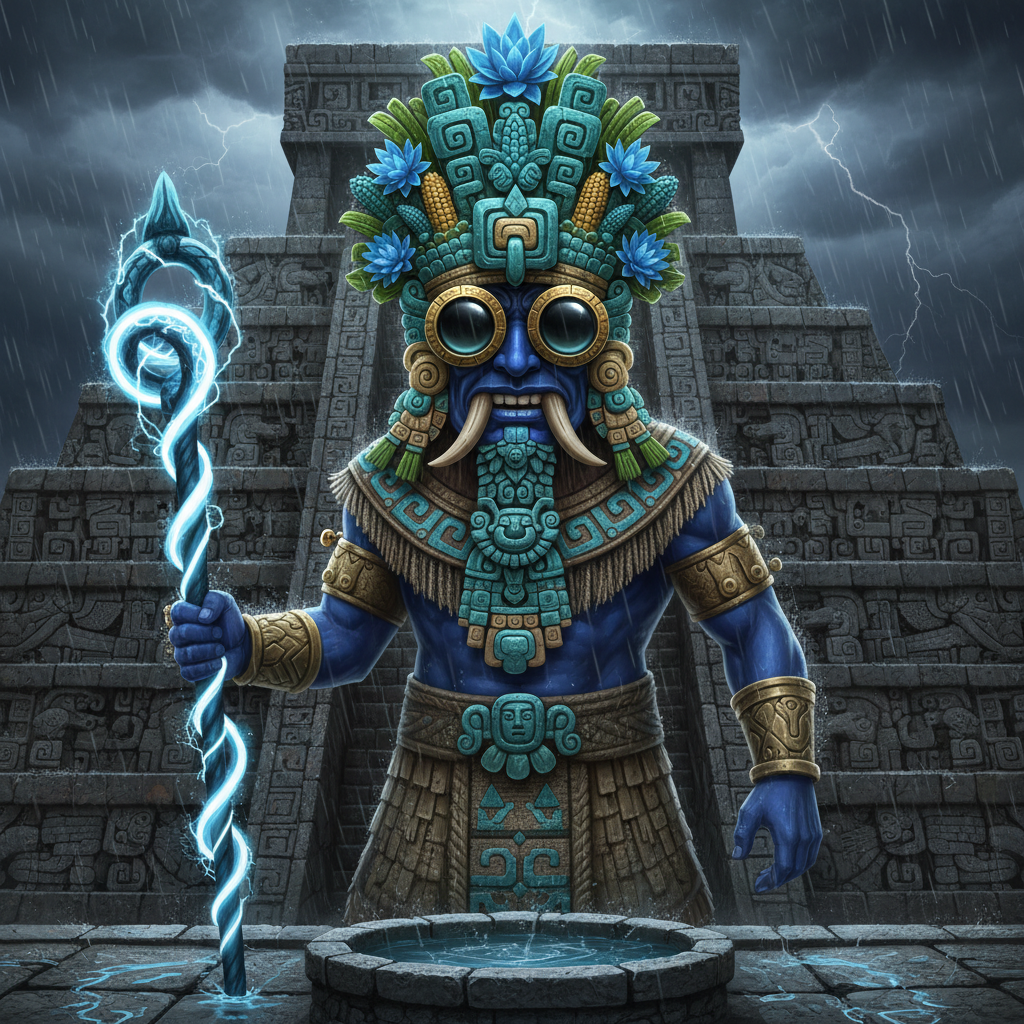
- He is depicted with bulging goggle-like eyes and a fanged mouth, an iconography that recurs across Mesoamerican art for over a thousand years.
- His paradise, Tlalocan, is a green and well-watered afterworld where those who die by water-related causes go to live forever.
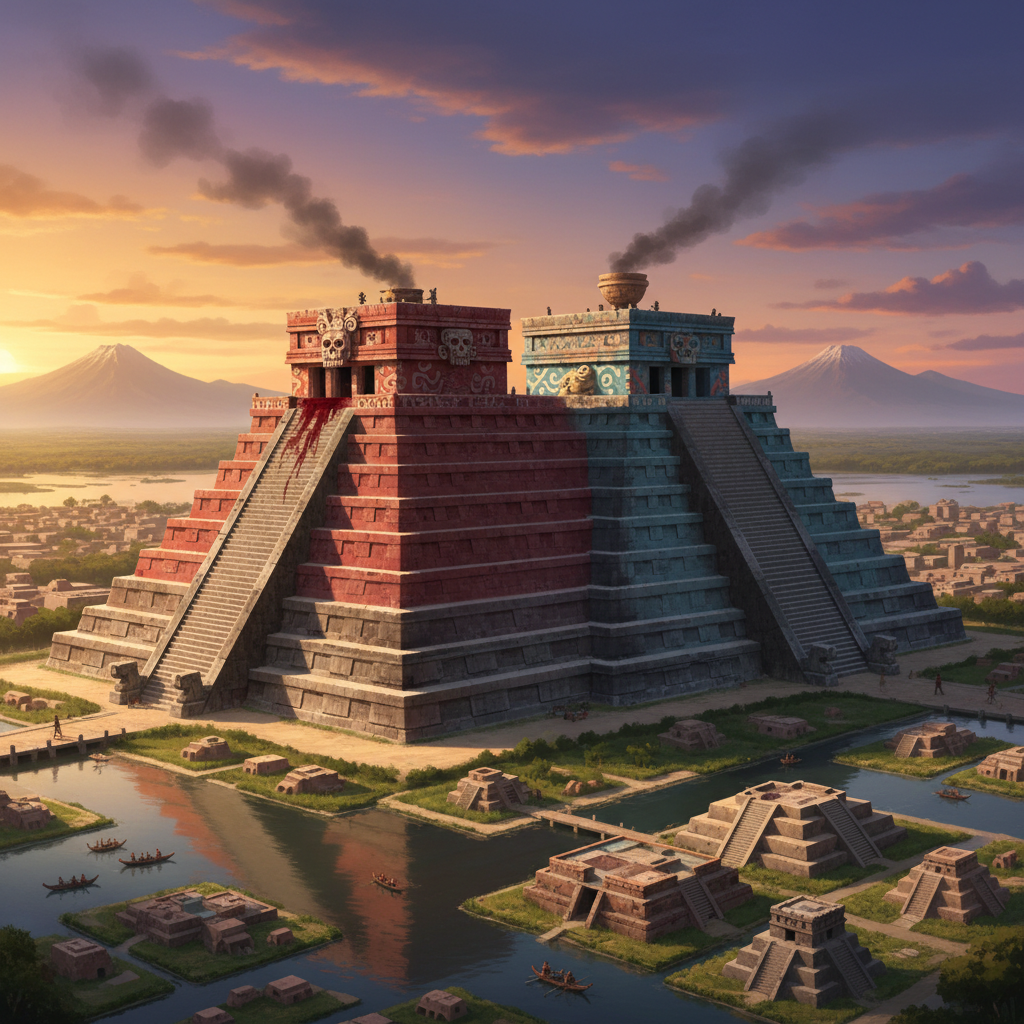
- Tlaloc shared the great twin-temple at Tenochtitlan with the war god Huitzilopochtli, marking him as one of the two highest gods of the Aztec state.
- His worship involved offerings of children at mountain shrines, a practice central to Aztec ritual and confirmed by archaeology at sites including Mount Tlaloc.
The Valley of Mexico is a high basin ringed by mountains. The rains that bring life to its maize fields fall from clouds piling up against those mountain walls. Long before the Aztecs ruled the valley, the people who lived there understood that without rain, there is no civilisation. Around 200 BCE in the great city of Teotihuacan, where the Pyramid of the Sun and the Pyramid of the Moon were built on a vast ceremonial axis, the rain god began to appear in murals and stone reliefs. He had goggle eyes, fangs, and a forehead crowned with water lilies. He was old before the Aztecs were a people. They inherited him, named him Tlaloc, and made him one of the two highest gods in their pantheon.
To call Tlaloc only a “rain god” is to miss the scale of him. He is rain and the absence of rain. He is lightning, hail, and the water in the underworld lakes. He is the gift of the maize harvest and the drought that destroys it. He is the green paradise where the drowned and the lightning-struck live in eternal abundance. Tlaloc is the entire weather system of the Aztec world made into a single divine person.
Origins and Cultural Roots
Tlaloc’s name in Nahuatl, the language of the Aztecs, may derive from tlalli (earth) and oc (something on or beneath), giving a meaning along the lines of “he who is on the earth” or “embodiment of the earth”. He is older than the Aztec empire by perhaps fifteen hundred years. The same goggle-eyed deity appears at Teotihuacan, the vast city that flourished in the Valley of Mexico from around 100 CE to 550 CE, and in earlier Olmec and Toltec art. Each culture knew him by a different name. The Maya knew him as Chaac. The Zapotecs called him Cocijo.
By the time the Aztecs, also called the Mexica, rose to dominance in central Mexico in the 14th century, Tlaloc was already an ancient god with a developed iconography. The Aztecs adopted him into their state religion and gave him the place of highest honour alongside their own tribal god Huitzilopochtli. The Templo Mayor at the heart of Tenochtitlan, the Aztec capital where Mexico City now stands, was a single pyramid with two summits. One temple at the top belonged to Huitzilopochtli, god of the sun and war. The other belonged to Tlaloc, god of rain. The two stood as equals.
This pairing was not arbitrary. The Aztec state ran on two things: military conquest and agricultural surplus. Huitzilopochtli oversaw the wars. Tlaloc oversaw the harvests. Together they kept the empire alive.
Iconography: The Goggle-Eyed God
Tlaloc is one of the most recognisable figures in Mesoamerican art. He wears wide circular goggles around his eyes and shows long curved fangs at the corners of his mouth. The goggles may represent the rings of falling raindrops, the surface of a still pool seen from below, or the eyes of a frog or serpent. His skin is often blue, the colour of water. He carries a thunderbolt or a serpent of lightning. On his head he sometimes wears a crown of rain clouds or maize tassels.
The image is unsettling to modern eyes, and it was meant to be. Tlaloc was not a comforting deity. He was vast, dangerous, and unpredictable. Rain that fell at the right time meant a successful harvest. Rain that came too late, or as hail, or in a flood, meant ruin. The same god gave both. His face had to be capable of both blessing and devastation.
The Tlaloc iconography is so distinctive that archaeologists use it to date and identify Mesoamerican objects across the entire region. From Teotihuacan murals to Maya stelae to Aztec stone reliefs, the goggles and fangs persist with remarkable consistency for fifteen centuries.
Tlalocan: The Paradise of the Drowned
The Aztecs believed that where you went when you died depended on how you died. Warriors killed in battle went to the eastern sky to accompany the sun. Women who died in childbirth went to the western sky as fearsome spirits. The vast majority went to Mictlan, the cold and shadowy underworld. But a small group of dead went to a different place altogether: Tlalocan, the paradise of Tlaloc.
Those who died of drowning, of lightning strikes, of certain water-related diseases, or of dropsy were claimed by Tlaloc. They went to live in his green and well-watered country, where it was always spring, where flowers always bloomed, and where food was always abundant. The Florentine Codex, compiled in the 16th century by Bernardino de Sahagun from Aztec informants, describes Tlalocan as a kind of perfect garden, a vision of fertility and ease that contrasted sharply with the cold austerity of Mictlan.
Murals at Teotihuacan, painted a thousand years before the Aztecs, depict figures swimming and singing in what scholars believe is a representation of Tlalocan. The afterworld of the rain god was an old idea by the time it reached the Aztec capital.

The Tlaloque and the Mountain Shrines
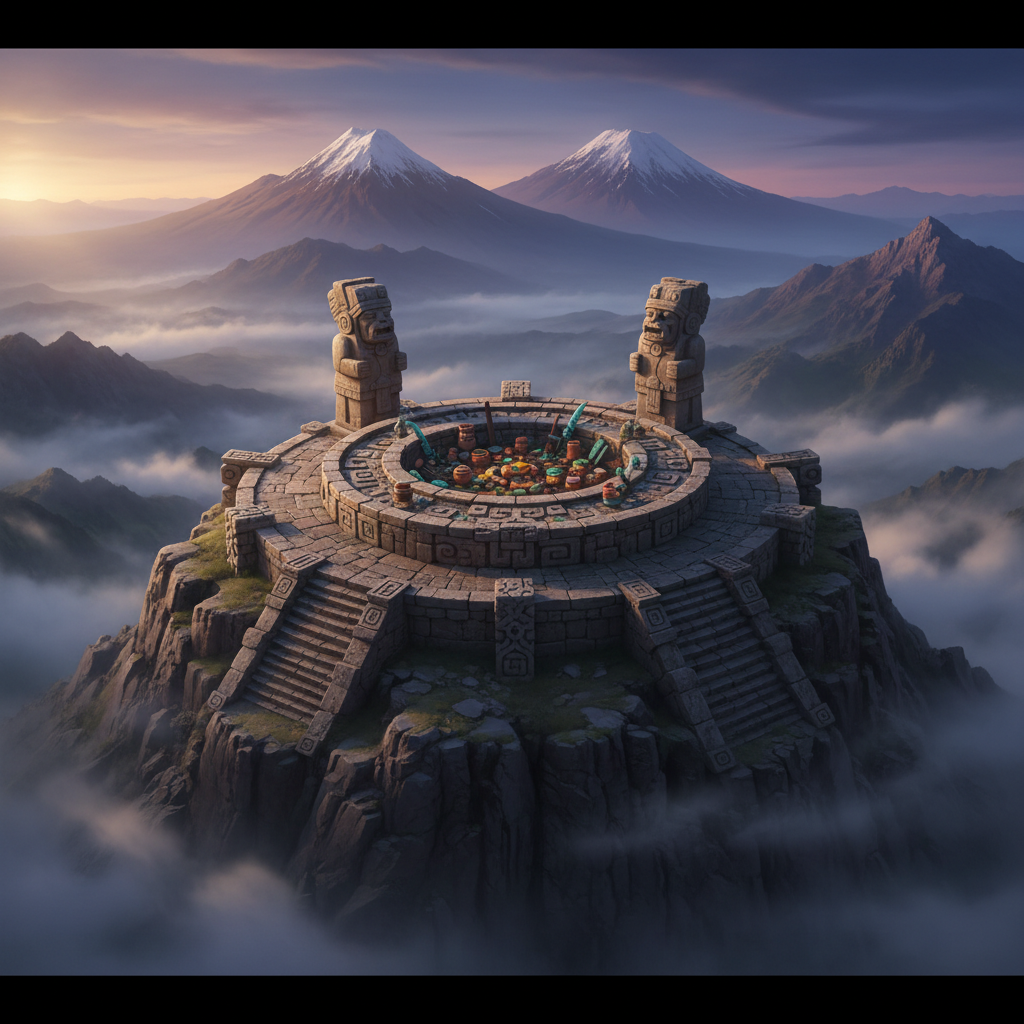
Tlaloc did not rule alone. He commanded a group of subordinate rain spirits called the Tlaloque, smaller deities who lived in the mountains and brought the rains down to the valleys. Each major peak around the Valley of Mexico had its own Tlaloque, and rituals to call rain were performed at high-altitude shrines on these mountains.
The most important of these shrines was at the summit of Mount Tlaloc, a 4,120-metre peak east of Mexico City. Aztec priests climbed to the summit each year to perform rituals at the start of the rainy season. Archaeologists have excavated the remains of stone enclosures, offering pits, and ceremonial precincts at the top of the mountain. The site is one of the highest archaeological zones in the world and remains an important place in modern Mexican Catholic-Indigenous syncretic practice, where rain rituals continue to be observed.
The most disturbing aspect of Tlaloc worship, well documented in the Spanish chronicles and confirmed by recent archaeology, was the sacrifice of children. The Aztecs believed that the tears of weeping children would call the rains. Several rituals dedicated to Tlaloc involved the sacrifice of young children at mountain shrines and at the Templo Mayor. Excavations at the Templo Mayor in Mexico City have uncovered the remains of dozens of sacrificed children, with offerings characteristic of Tlaloc worship. This practice cannot be softened or explained away. It was a real and central part of how the Aztecs negotiated with their rain god.
Symbolism and Meaning
Tlaloc embodies a worldview shaped by life in a high arid basin. The Valley of Mexico is dependent on a single rainy season. The crops succeed or fail on whether the rains come at the right time. To the people who lived there, the god of rain was the god of life itself. He was also the god of death, because his withholding could destroy entire populations through famine.
This dual nature is reflected in his place in the calendar. The Aztec ritual year was structured around two seasons, the dry and the wet, and Tlaloc presided over the wet half. Festivals like Atlcahualo and Tozoztontli, performed in February and March, called the rains to begin. Festivals at the height of summer thanked Tlaloc for the storms that brought the maize to fruition. Rain was not separate from time. It was the rhythm by which time was kept.
Tlaloc also stands in the broader context of personified weather across world mythology. The Greek Anemoi divided the sky into directional winds. The Japanese Fujin carried the bag of winds across his shoulders. The Maya Hurakan spoke the world into being from the storm. Each tradition recognised that weather is too powerful, too consequential, to be impersonal. Tlaloc gave the rain a goggled face and a hand that could either bless or destroy. The Aztecs lived in the gap between those possibilities.
Legacy and Modern Influence
Tlaloc remains one of the most visible Aztec gods in modern Mexican culture. A massive stone statue believed to depict Tlaloc, weighing around 168 tonnes, was moved from a hillside near the village of Coatlinchan to Mexico City in 1964. The story of the move is famous: when the statue arrived in the capital, an unseasonable rainstorm broke out and drenched the city. Mexicans, including those with no connection to traditional religion, took it as a sign that the old god was still paying attention.
Modern artists, writers, and filmmakers continue to draw on Tlaloc’s image. He appears in muralist tradition from Diego Rivera onward, in literature from Octavio Paz, and in archaeological exhibitions around the world. The discovery of the Templo Mayor in central Mexico City in 1978, when workers laying a power line struck a giant carved disc of the moon goddess Coyolxauhqui, opened a window onto the religious heart of the Aztec capital. Tlaloc’s temple at the top of the pyramid has been a focus of excavation ever since.
For modern readers, Tlaloc is a reminder that the gods of weather are not relics of a primitive past. They are sophisticated cosmological figures who organised entire civilisations. The Aztec sense that life depends on rain, and that rain depends on a divine relationship that must be honoured, is not so foreign as it might first appear. In a world where climate now reshapes harvests across continents, the questions Tlaloc was asked to answer have not gone away.
Mythology Delivered to Your Inbox
Join 25,000 readers exploring world myth, ancient legends, and the cosmic questions that have shaped human storytelling. New encyclopedia entries delivered every week.
SubscribeFrequently Asked Questions
Who is Tlaloc in Aztec mythology?
Tlaloc is the Aztec god of rain, water, fertility, and lightning. He was one of the two highest gods of the Aztec state, sharing the great twin-temple at Tenochtitlan with the war god Huitzilopochtli, and presided over the harvests on which Aztec civilisation depended.
Why does Tlaloc have goggle eyes?
The goggle-eye iconography is one of the oldest visual conventions in Mesoamerican art, predating the Aztecs by more than a thousand years. The goggles may represent rings of falling rain, the surface of water seen from below, or the eyes of a frog or serpent. They mark Tlaloc as belonging to a different order of being than humans.
What is Tlalocan?
Tlalocan is the paradise of Tlaloc. Aztecs believed those who died by drowning, lightning strikes, or certain water-related diseases went there to live in eternal abundance. Murals at Teotihuacan depict figures swimming and singing in what scholars believe is an early version of this afterworld.
Did the Aztecs sacrifice children to Tlaloc?
Yes. Spanish chronicles and modern archaeology both confirm that several rituals dedicated to Tlaloc involved the sacrifice of children, whose tears were believed to call the rains. Excavations at the Templo Mayor in Mexico City have uncovered the remains of sacrificed children with offerings characteristic of Tlaloc worship.
Is Tlaloc related to the Maya rain god Chaac?
Yes. Tlaloc and Chaac share a common Mesoamerican origin and similar iconography, including the goggle eyes and association with lightning serpents. The Aztec Tlaloc, the Maya Chaac, and the Zapotec Cocijo are all expressions of a long-running Mesoamerican rain god tradition.
Where can Tlaloc images be seen today?
The most famous Tlaloc statue stands outside the National Museum of Anthropology in Mexico City, where it was placed in 1964. Original Aztec sculptures, codices, and murals depicting Tlaloc are also held in major museum collections worldwide and at the ongoing Templo Mayor archaeological site in central Mexico City.