Quick Summary
- Set, also spelled Seth or Sutekh, is the ancient Egyptian god of storms, deserts, foreigners, and disorder, brother and murderer of Osiris.
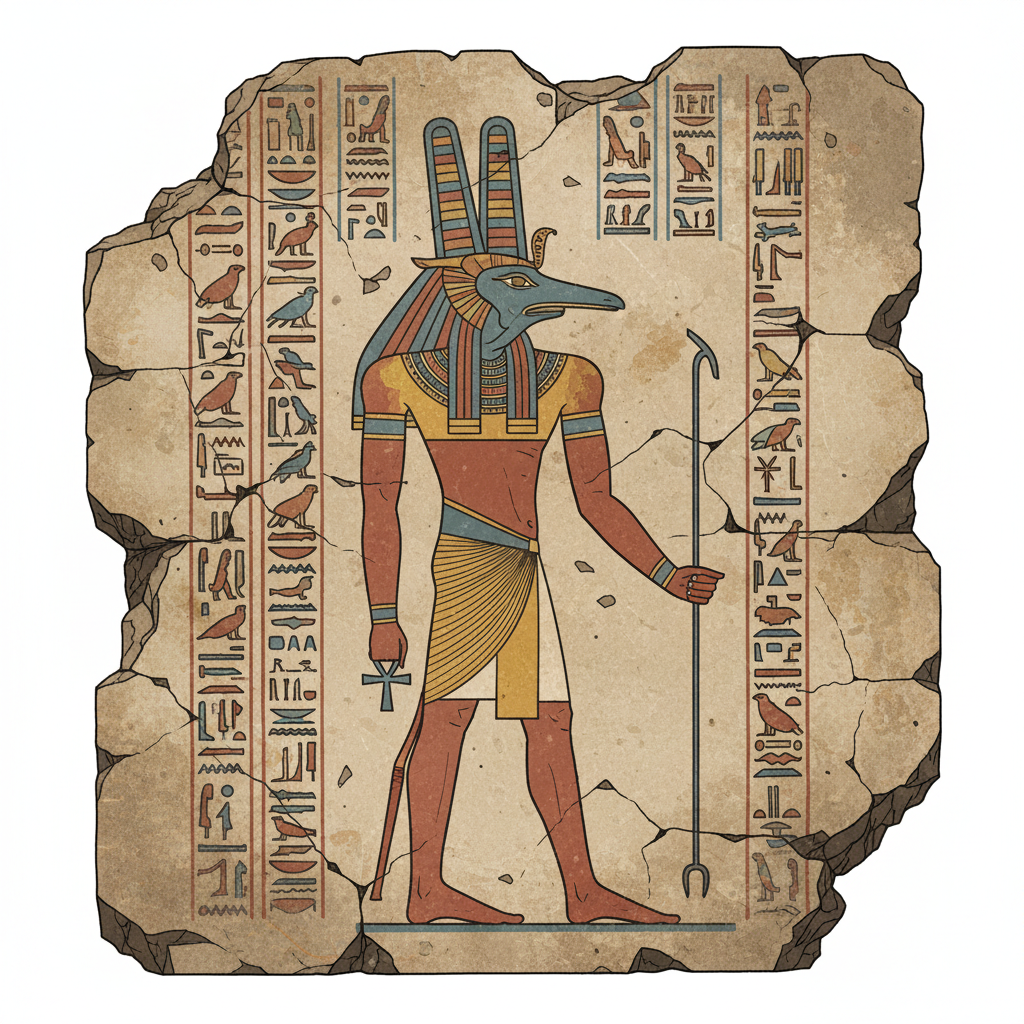
- He is depicted with the head of a mysterious composite animal called the Set animal, with a curved snout, square ears, and a forked tail.
- His most famous role in Egyptian myth is as the killer of his brother Osiris and the lifelong opponent of his nephew Horus.
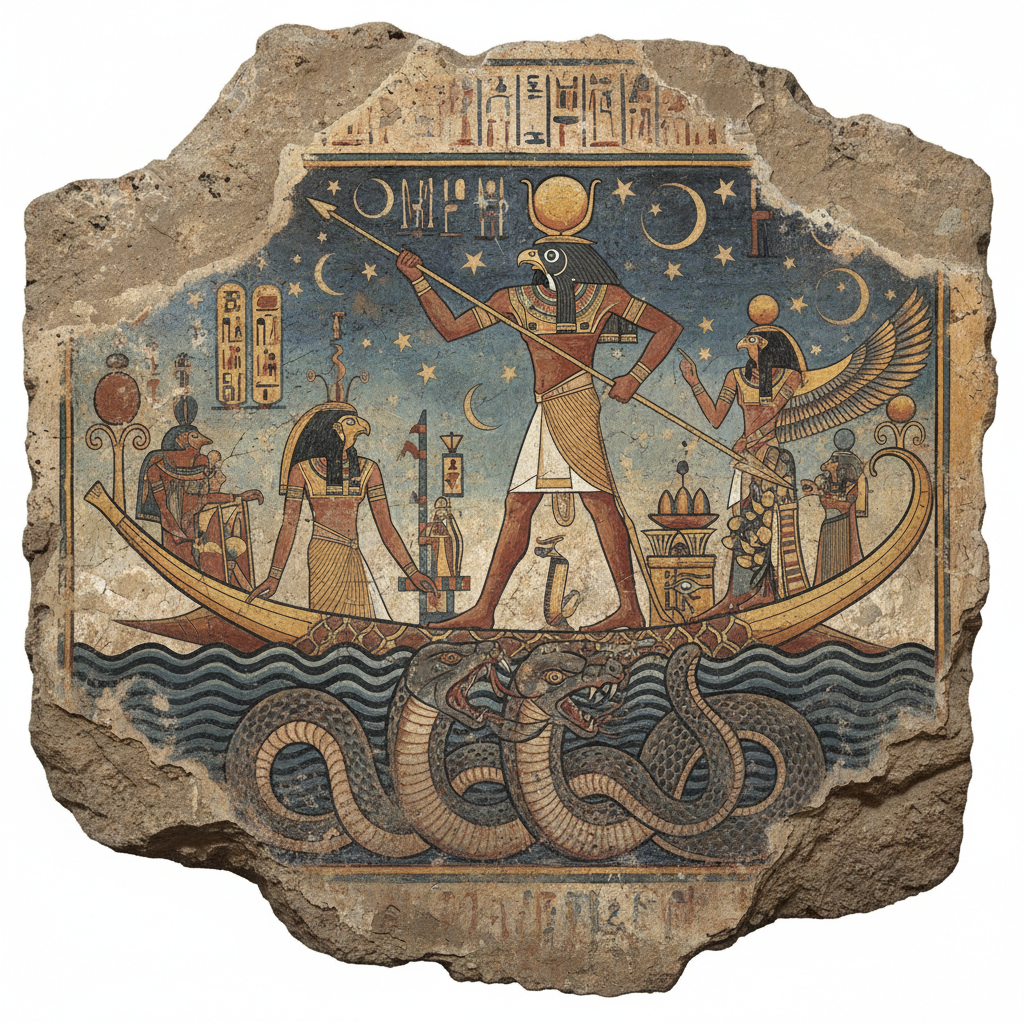
- Despite his violent reputation, Set was honoured as a protective god who defended the sun barque of Ra against the chaos serpent Apophis each night.
- Worship of Set rose and fell across three thousand years of Egyptian religion, peaking under the Hyksos and later under the Ramessid dynasty.
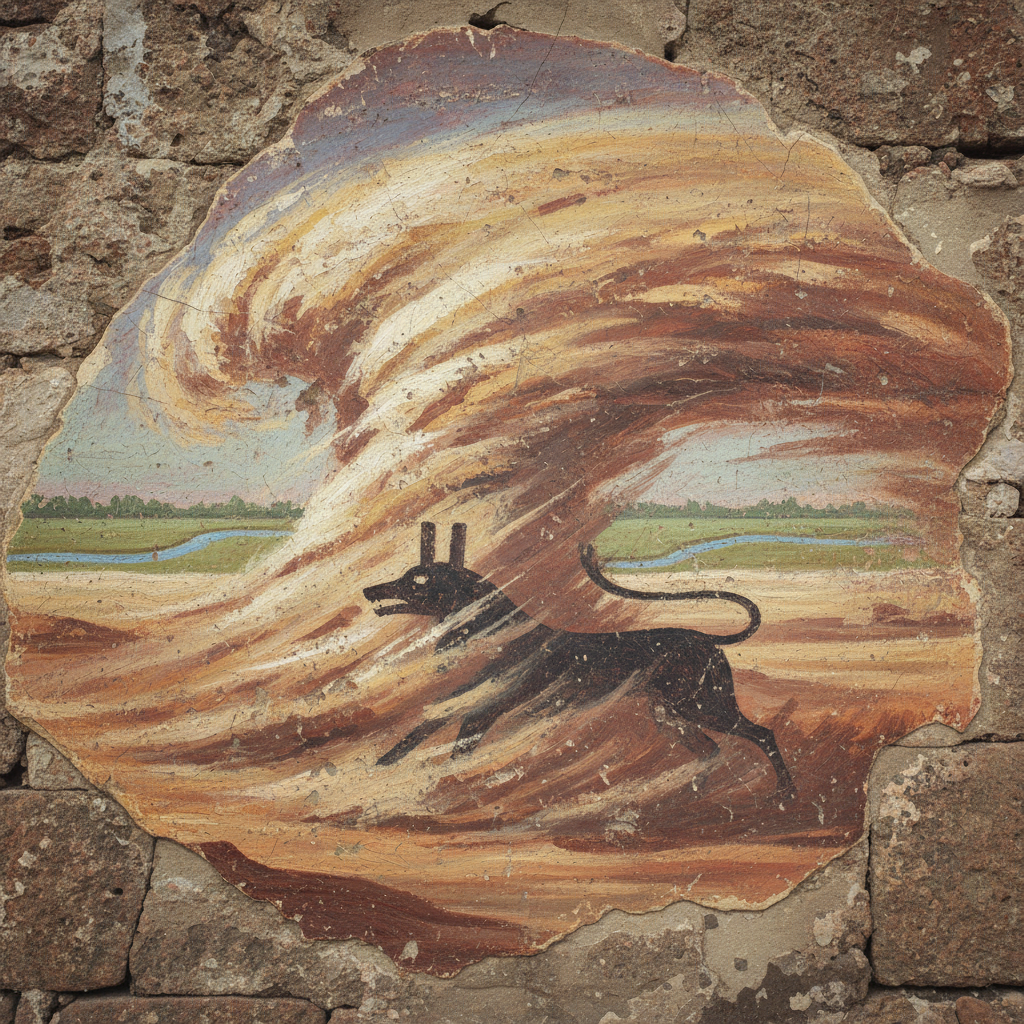
The desert wind comes off the western cliffs and scours the green of the Nile valley with hot sand. Locusts arrive from the east. The river fails to rise. A storm boils up over the Red Land where no one lives. To the ancient Egyptians, none of this was random weather. It was the work of a god whose name was so dangerous that, in some periods, scribes erased it wherever they found it. His name was Set.
Set is one of the most fascinating figures in Egyptian religion. He is not a simple villain. He is a complicated god who was alternately worshipped and reviled across three thousand years of Egyptian history. He kills his brother. He defends the sun. He is the god of foreigners and the god of pharaohs. To approach him properly is to set aside the modern habit of sorting deities into good and evil and to meet him as the Egyptians met him: as a force whose presence in the cosmos was necessary, dangerous, and unavoidable.
Origins and Cultural Roots
Set (in Egyptian Setesh or Sutekh; in Greek sources Seth) is one of the oldest gods in the Egyptian pantheon, attested as early as the late Predynastic period (around 3300 BCE). His worship is associated with Upper Egypt, particularly the towns of Naqada and Ombos. As Egyptian religion developed across the dynasties, Set’s role and reputation shifted dramatically. He was at various points a great protective god, a murderer to be feared, and an unspeakable enemy whose name was scratched off temple walls.
His parentage is given in the Heliopolitan creation tradition: he is the son of the earth god Geb and the sky goddess Nut, brother of Osiris, Isis, and Nephthys. The four siblings form one of the most consequential generations of gods in Egyptian myth. The story of their interactions, especially the murder of Osiris and the long struggle with Horus, is one of the foundational narratives of Egyptian religion.
The Set animal, the composite creature that gives Set his head, has never been securely identified with any real species. It has the body of a canid, a long curved snout, tall square-tipped ears, and a forked tail. Some scholars have proposed it represents an extinct or now-rare animal of the Egyptian deserts. Others suggest it is a deliberately impossible creature, a divine animal not meant to correspond to anything in nature. The mystery is part of the iconography. Set looks like a being from a desert that no one has ever quite seen.

The Murder of Osiris
The most famous Set story is the killing of his brother Osiris. The fullest surviving version comes from the Greek writer Plutarch in his De Iside et Osiride (1st century CE), but the basic narrative is centuries older and appears in fragments throughout Egyptian texts. Osiris is the king of Egypt and a beloved ruler. Set, his brother, plots his death.
At a banquet, Set produces a magnificent chest, beautifully made, and announces that whoever fits it perfectly will receive it as a gift. Several gods try, and none fit. Osiris, when his turn comes, lies down in the chest, and it fits him exactly. Set’s accomplices nail down the lid, seal it with lead, and throw the chest into the Nile, where it floats out to the Mediterranean. Osiris drowns.
His sister-wife Isis searches for him. She finds the chest, brings it back to Egypt, and hides it. Set discovers the body and, in a second act of violence, dismembers Osiris into fourteen pieces and scatters them across Egypt. Isis, in one of the most famous scenes of Egyptian myth, recovers thirteen of the pieces and reassembles her husband. With the help of Anubis and Thoth, she revives him long enough to conceive Horus. Osiris then descends to the underworld to rule the dead.
The Contest of Horus and Set
The killing of Osiris sets up the long divine drama of the Contest of Horus and Set. Horus, son of Osiris and Isis, claims his father’s throne. Set claims it himself. The two enter a series of contests and trials that span eighty years in some sources, with each god using cunning, strength, transformation, and outright cheating to prevail. The contest is preserved most fully in the late Egyptian text known as The Contendings of Horus and Seth, from around the 12th century BCE.
The two fight as hippopotamuses underwater. Set tears out one of Horus’s eyes. Horus tears off one of Set’s testicles. They settle arguments before the council of the gods, with most of the divine assembly favouring Horus. Eventually Horus wins and is acknowledged as king of Egypt. Set, depending on the version, is either banished, integrated into the divine order in a lesser role, or exiled to the desert.
The mythology behind this contest is more than a family quarrel. It encodes the legitimacy of the Egyptian pharaoh, who was understood as the living Horus, ruling by divine inheritance from Osiris. Every coronation re-enacted the contest. Every pharaoh, on death, became Osiris and yielded the throne to his Horus successor. The cycle of Osiris, Set, and Horus is the cycle of Egyptian kingship itself.
The Defender of Ra
Despite his role as Osiris’s killer, Set was not always reviled. In other traditions, he played a crucial protective role. Each night, the sun god Ra travelled through the underworld in his solar barque, beset by the great chaos serpent Apophis, who tried to swallow the boat and end the world. Set stood at the prow with a spear and fought Apophis off. Without Set, the sun would not rise.
This dual role, killer of Osiris and defender of Ra, is what makes Set so interesting. Egyptian religion did not flatten its gods into single roles. Set could be the antagonist of one cosmic drama and the hero of another. His strength, his ferocity, his association with chaos were exactly what was needed to face Apophis. The same attributes that made him dangerous to his family made him essential against the serpent.
Symbolism and Meaning
Set embodies the Egyptian concept of isfet, disorder or chaos, opposed to maat, the cosmic order. But the Egyptians did not see chaos as simply evil. Without it, there is no movement, no growth, no possibility of change. Set’s storms break the dry season. His desert is the Red Land that frames the Black Land of the fertile Nile valley. His foreignness gives the Egyptians a way to think about what lies beyond their borders.
His association with storms places him in the cross-cultural family of storm deities. The Greek Anemoi, the Japanese Fujin, the Maya Hurakan, the Aztec Tlaloc, the Iroquois Dagwanoenyent: each gives a face to violent weather. Set is the desert variant, the storm of sand and locust rather than rain and lightning.
His worship in Egypt rose and fell with politics. Under the Hyksos, the Asiatic rulers who controlled northern Egypt around 1650-1550 BCE, Set was elevated as the chief god, identified with their own storm deity. Under the Ramessid pharaohs, he was honoured as a divine ancestor of the royal line. Under other dynasties, especially in the Late Period, his name was deliberately erased and his cult suppressed. To track Set’s reputation across Egyptian history is to track the politics and theology of three millennia.
Legacy and Modern Influence
Set has had a robust afterlife in Western culture. The Greeks and Romans associated him with their own god of storms, Typhon. Early Christian writers identified him as a demon, and his name lingered in occult and esoteric traditions through the medieval and Renaissance periods. In modern fiction, he appears as a major figure in Rick Riordan’s The Kane Chronicles, in graphic novels, in video games like Smite, and in countless adaptations of the Osiris myth.
The Marvel Comics version of Set is a multi-headed serpent demon, a far cry from the Egyptian original but drawing on the long tradition of Set as adversary. The Anton LaVey-influenced Temple of Set, founded in 1975, takes its name from him. Egyptologists in the 19th and 20th centuries spent considerable effort rehabilitating his reputation, arguing that his demonisation was a late development and that the earlier Egyptian Set was more complex.
For modern readers, Set is a useful figure to think with. He is what mythologies do when they need to talk about the parts of the world that resist order. He is the brother who kills, the desert that takes, the wind that ruins. He is also the spear at the prow of the night barque. The Egyptians knew that you cannot have one without the other. The same god who scatters Osiris keeps the sun rising. The same chaos that destroys also makes change possible.
More From Egyptian Mythology
Continue exploring the gods, kings, and afterlife of ancient Egypt. New encyclopedia entries published every week.
Explore MoreFrequently Asked Questions
Who is Set in Egyptian mythology?
Set, also called Seth or Sutekh, is the ancient Egyptian god of storms, deserts, foreigners, and disorder. He is the brother of Osiris, Isis, and Nephthys, and the father of Anubis in some traditions. His most famous deed is the murder of his brother Osiris and the long contest for the throne with his nephew Horus.
What is the Set animal?
The Set animal is the composite creature whose head Set wears in Egyptian art. It has a long curved snout, tall square-tipped ears, and a forked tail, and it has never been securely identified with any real species. Some scholars suggest it represents an extinct desert animal; others see it as a deliberately impossible divine creature.
Why did Set kill Osiris?
Egyptian sources offer several motives, including jealousy of Osiris’s kingship, anger at being passed over, and a more cosmic role as the agent of disorder against order. The killing is preserved most fully by Plutarch and is alluded to throughout Egyptian texts spanning more than two millennia.
Was Set always considered evil?
No. Across three thousand years of Egyptian religion, Set’s reputation shifted dramatically. He was a great protective god under the Hyksos and the Ramessid pharaohs, and even his demonic reputation in later periods coexisted with his role as defender of Ra against the chaos serpent Apophis. The view of him as straightforwardly evil is a late and Greek-influenced development.
What is the Contest of Horus and Set?
The Contest is the long mythological dispute between Set and his nephew Horus over the kingship of Egypt. It includes contests of strength, transformation, and cunning, and ultimately ends with Horus winning the throne. The story is preserved most fully in the New Kingdom text The Contendings of Horus and Seth.
How does Set protect the sun?
Each night, the sun god Ra travels through the underworld in his solar barque and is attacked by the chaos serpent Apophis. Set stands at the prow of the barque with a spear and fights Apophis off. This protective role gives Set his most positive aspect in Egyptian theology.