Egyptian mythology developed along the banks of the Nile over more than three thousand years, producing one of the most visually striking mythological traditions in human history. The gods of Egypt, from the sun god Ra to the jackal-headed Anubis, were active participants in daily life. Egyptian mythology is inseparable from its funerary culture, with elaborate beliefs about the afterlife, the weighing of the heart, and the journey through the Duat underworld.


Latest Blog
Frequently Asked Questions
How many gods did ancient Egypt have?
Ancient Egypt had over 2,000 named deities, though this number varied over its 3,000-year history. Some gods were worshipped nationally (Ra, Osiris, Isis), while others were local to specific cities or regions. The Egyptian pantheon was not fixed. New gods could emerge, old gods could merge with each other (syncretism), and the relative importance of different gods shifted as political power moved between cities. Amun, a local god of Thebes, became the supreme deity Amun-Ra when Thebes rose to political dominance.
What happens after death in Egyptian mythology?
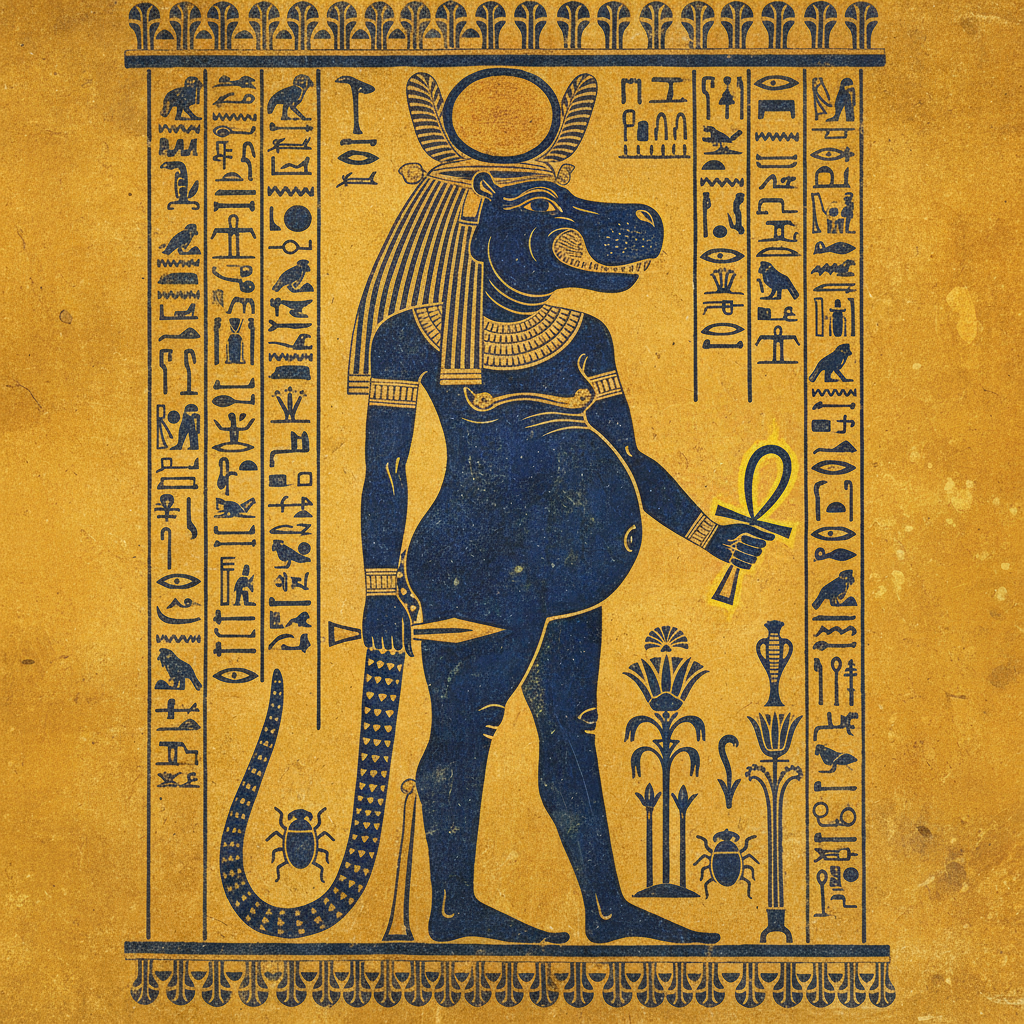
The Egyptian afterlife was a complex journey. After death, the soul travelled through the Duat (underworld), facing gates guarded by demons who could only be passed by reciting the correct spells from the Book of the Dead. The final test was the Weighing of the Heart: the heart was placed on a scale against the feather of Maat (truth). If the heart was lighter, the soul entered the Field of Reeds (paradise). If heavier, it was devoured by Ammit, a crocodile-lion-hippo hybrid, ending the soul's existence.
What is the Eye of Horus?
The Eye of Horus (Wadjet Eye) is one of ancient Egypt's most recognisable symbols, representing protection, healing, and restoration. According to myth, Horus lost his left eye fighting his uncle Set to avenge his father Osiris. The god Thoth restored the eye, making it a symbol of wholeness. The Eye was used as a powerful protective amulet on jewellery, coffins, and boat prows. Its component parts also represented mathematical fractions used in measuring grain.
Who was the most powerful Egyptian god?
This changed over time. Ra, the sun god, was the primary deity for much of Egyptian history. Osiris ruled the underworld and became increasingly important as funerary culture developed. Amun rose to supreme status when merged with Ra as Amun-Ra during the New Kingdom. During Akhenaten's reign (1353-1336 BCE), the pharaoh attempted to replace all gods with a single deity, the Aten (sun disc), in one of history's earliest experiments with monotheism. After Akhenaten's death, the old gods were restored.
What are hieroglyphics?
Hieroglyphics are the formal writing system of ancient Egypt, using over 700 symbols that represent sounds, words, and concepts. The word means "sacred carvings" in Greek. Hieroglyphics were primarily used for monumental inscriptions on temples and tombs. For everyday writing, Egyptians used simplified scripts called hieratic and later demotic. The ability to read hieroglyphics was lost for over a thousand years until the Rosetta Stone was decoded by Jean-Francois Champollion in 1822.
What is the Book of the Dead?
The Book of the Dead is a collection of spells, prayers, and instructions designed to guide the deceased through the dangers of the Duat underworld. It was not a single standardised text but rather a personalised collection selected for each individual. Spells were written on papyrus scrolls placed in the coffin, painted on tomb walls, or inscribed on amulets. The most famous section describes the Weighing of the Heart ceremony before Osiris.
Why were cats sacred in ancient Egypt?
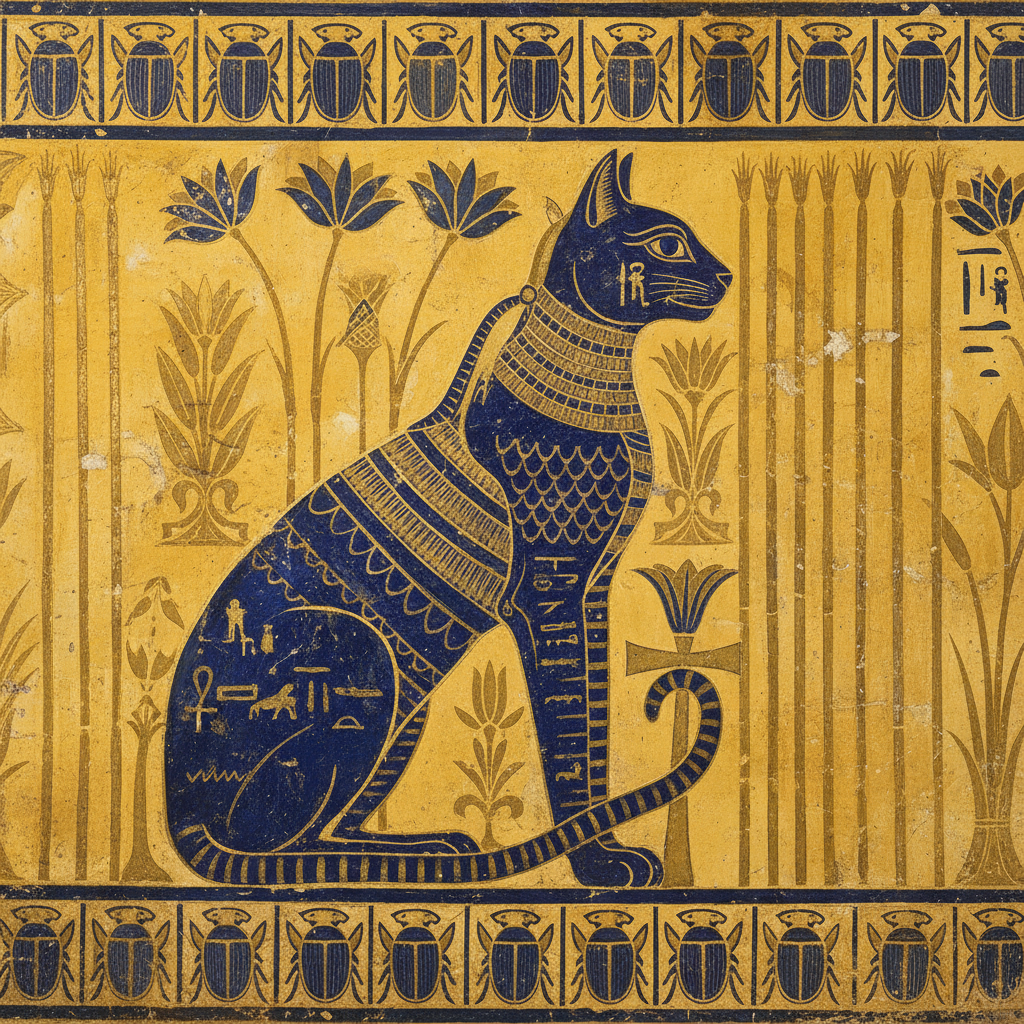
Cats were associated with the goddess Bastet, who represented home, fertility, and protection. Killing a cat, even accidentally, could be punished by death. Cats were mummified and buried with great ceremony, and massive cat cemeteries have been discovered at several Egyptian sites. The reverence went beyond symbolism: cats were practically valued for killing snakes and rodents that threatened grain stores and homes along the Nile.
What was the relationship between pharaohs and the gods?
Pharaohs were considered living gods, specifically incarnations of Horus (the falcon-headed sky god). Upon death, the pharaoh became one with Osiris, ruler of the underworld. This divine status gave pharaohs absolute authority but also imposed obligations: they were responsible for maintaining maat (cosmic order) through rituals, temple construction, and just rule. A pharaoh who failed these duties risked cosmic chaos.
Why did Egyptians build pyramids?
Pyramids were monumental tombs for pharaohs, designed to protect their bodies and ensure their successful transition to the afterlife. The pyramid shape may represent the primordial mound from which the world was created in Egyptian mythology, or the rays of the sun descending to earth. The most famous pyramids at Giza were built during the Old Kingdom (around 2560 BCE). Contrary to popular belief, they were built by paid workers, not slaves.
How did Egyptian mythology end?
Egyptian mythology declined gradually over centuries rather than ending abruptly. Greek and Roman rule introduced new influences, and many Egyptian gods were syncretised with Greek equivalents (Thoth became Hermes, Isis absorbed aspects of Aphrodite). The rise of Christianity in the Roman Empire led to the closure of Egyptian temples, with the last known hieroglyphic inscription dating to 394 CE at the Temple of Isis on Philae Island. However, some Egyptian mythological concepts survived within Coptic Christianity and Hermetic philosophy.