Quick Summary
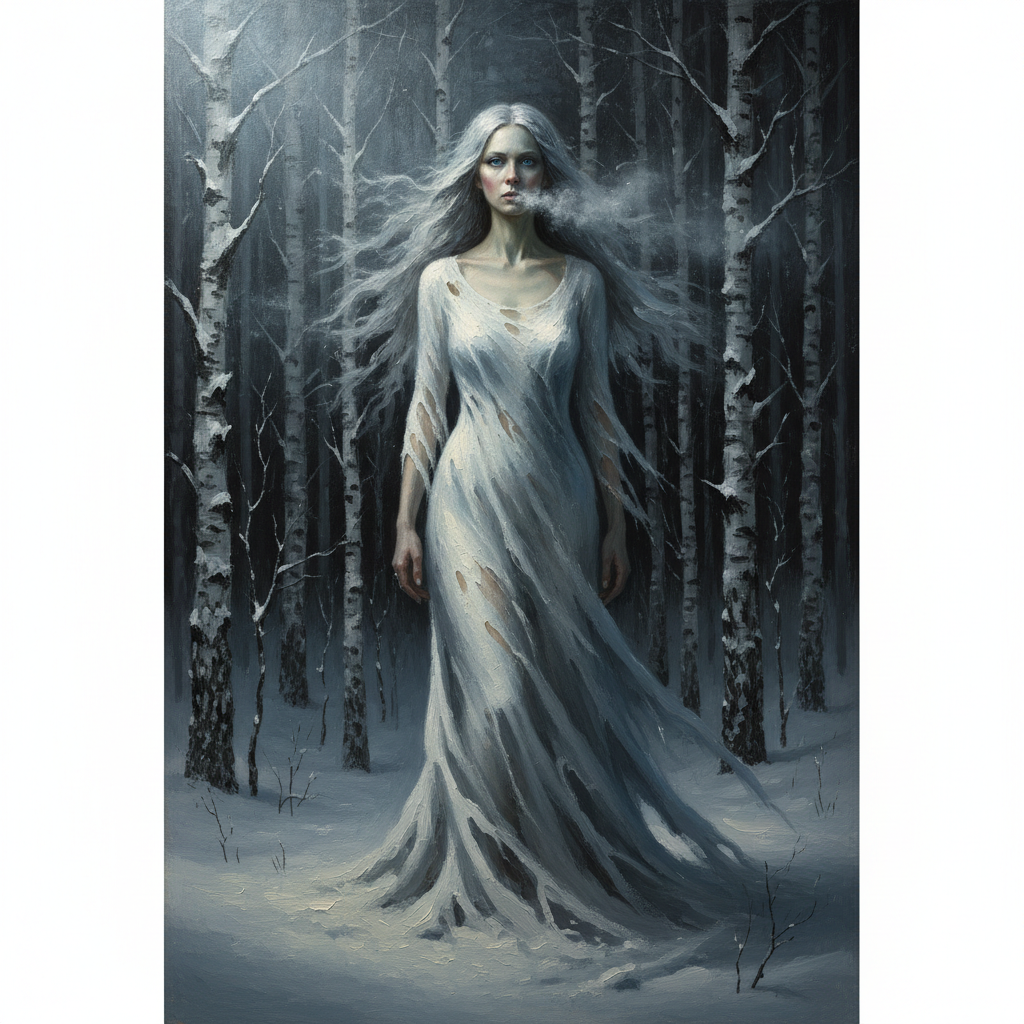
- Marzanna, also called Morena, Mara, or Marzaniok, is the Slavic goddess of winter, death, plague, and the cyclical rebirth of the natural world.
- Her drowning or burning in effigy at the spring equinox is a Slavic folk ritual still practised today in Poland, Slovakia, the Czech Republic, and parts of Lithuania and Ukraine.
- The ritual symbolises the death of winter and the return of life, an act of communal joy at the end of the cold months.
- She belongs to the wider family of European death-and-rebirth goddesses, alongside the Greek Persephone, Anglo-Saxon Eostre, and Celtic Brigid.
- Marzanna’s worship survived the Christian conversion of the Slavs and continues today as folk custom in many Slavic countries.
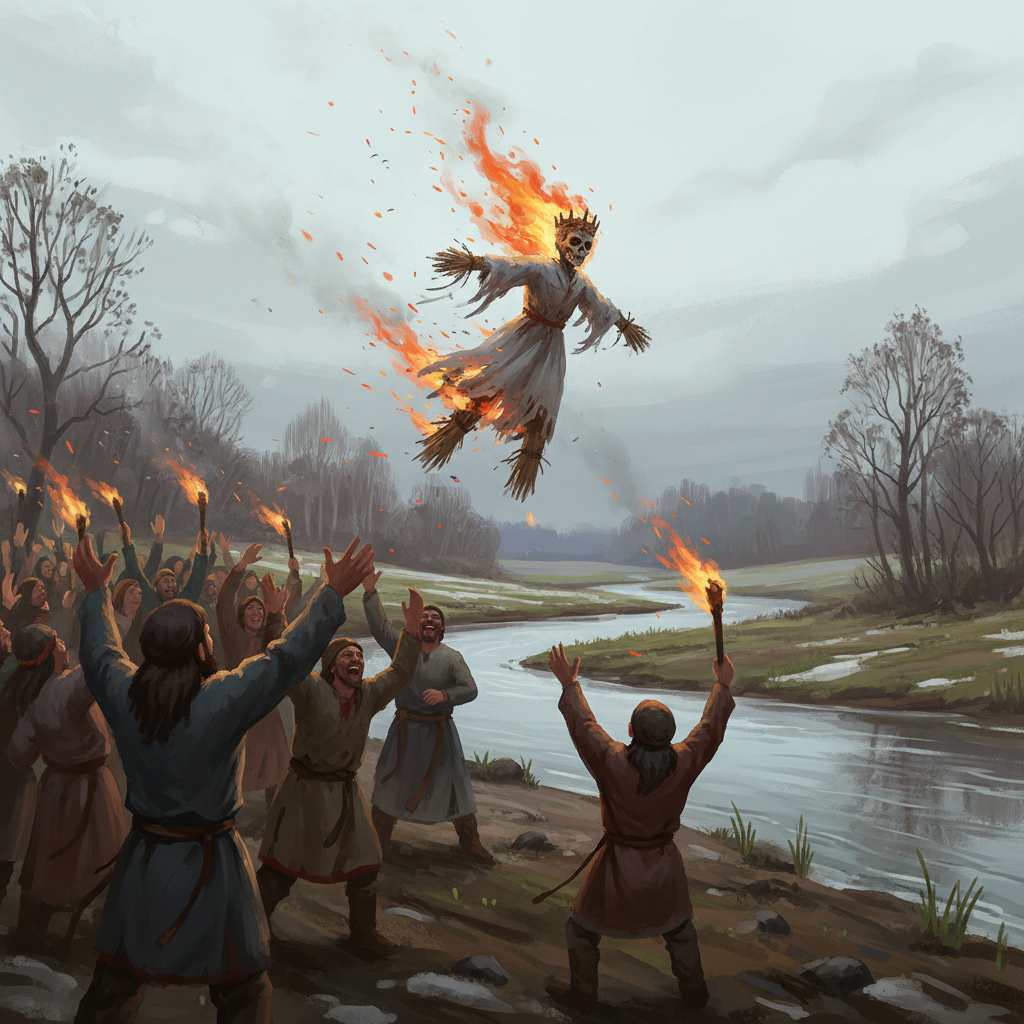
The first day of spring in a Polish village. The children have built her out of straw and old rags, dressed her in a worn-out white dress, woven her braids from rope. They carry her down to the river. Songs are sung. The straw figure is set on fire, or she is drowned in the cold water, or both at once. The villagers cheer as she sinks or burns. They have killed winter. They walk back home with the certainty that the spring is now allowed to begin.
This ritual has been performed in Slavic lands for over a thousand years. The figure being killed is Marzanna, the goddess of winter and death. Her name is older than the Christian faith of the people who burn her. Her death is not real. It is a ritual death, performed every year so that the actual death of cold and hunger can finally end. Marzanna is one of the most striking surviving folk traditions in Europe.
Origins and Cultural Roots
Marzanna belongs to the religious tradition of the pre-Christian Slavs, the peoples whose languages and cultures spread across central and eastern Europe in the early medieval period. Slavic religion is harder to reconstruct than Greek, Norse, or Egyptian, because much less written material survived the Christianisation of the Slavs. What remains comes from medieval chronicles, occasional comments by Christian missionaries, place names, folk customs, and the comparative work of philologists and folklorists.
Within this somewhat fragmentary picture, Marzanna stands out for the durability of her ritual. She is mentioned by name in the 15th-century Polish chronicle of Jan Dlugosz, who interpreted her as a Slavic counterpart to the Roman Ceres or Diana. Modern scholars place her more firmly in the family of death-and-winter goddesses, with parallels in Lithuanian (Mara), Belarusian (Maryna), and Czech (Morena) traditions. The name itself derives from a Proto-Slavic root *mor-, related to death, plague, and decay.
The same root produces words like mort (death) in Latin and Romance languages, murder in English, and mara (a malevolent spirit causing nightmares) in many European traditions. Marzanna is thus etymologically as well as functionally a goddess of death.

The Drowning of Marzanna
The central ritual of Marzanna takes place at the spring equinox or the first warm day of March. In its traditional form, the ritual is conducted by children and young women of a village. They build a life-sized straw effigy of Marzanna, dress her in old clothes, sometimes a white wedding dress, sometimes black mourning clothes, and parade her through the streets and the fields.
At the riverbank, the procession stops. The effigy is set on fire and thrown into the water, or first immersed in the river and then burned, depending on regional tradition. Some versions involve smashing the effigy on a tree before drowning her. The villagers chant or sing. The death of the goddess is celebrated, not mourned. Spring is now allowed to come.
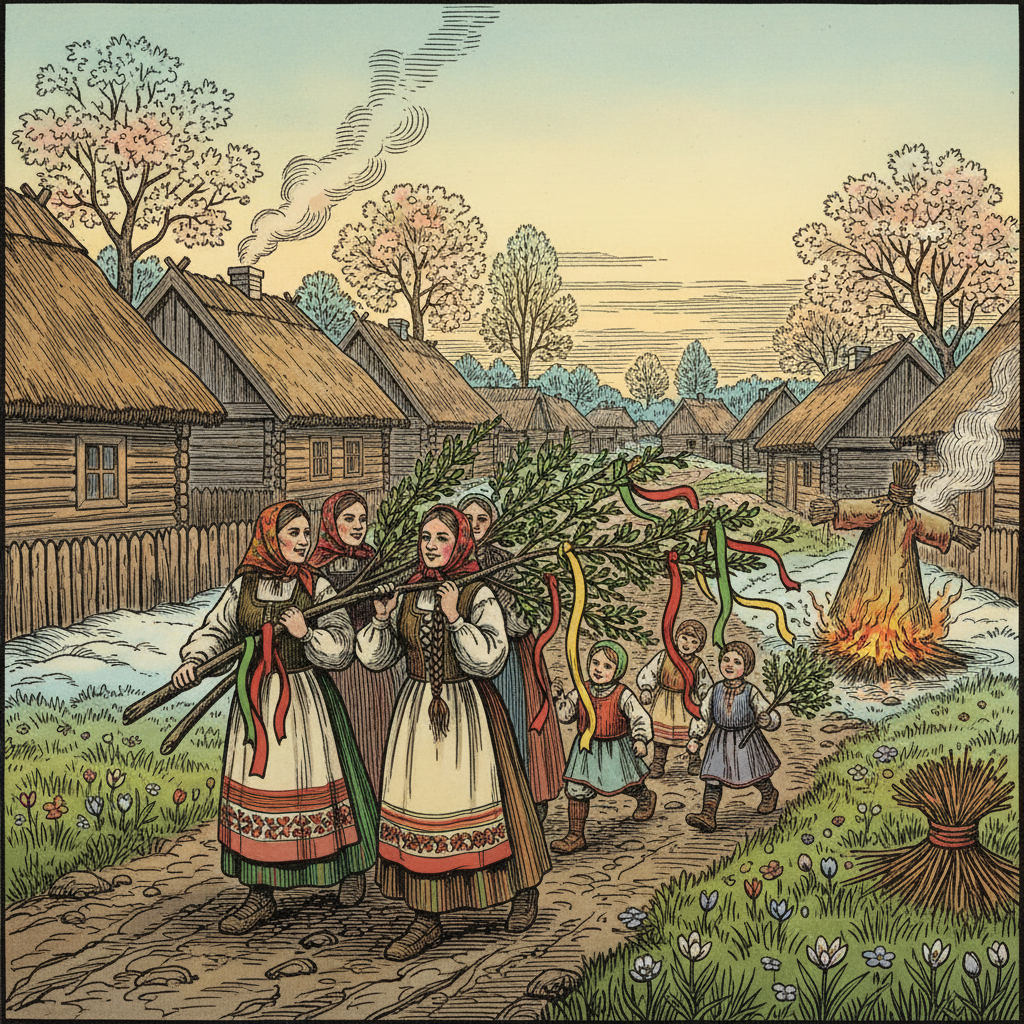
In some traditions, the destruction of Marzanna is followed by the introduction of her opposite, sometimes called Lato (Summer), Lalka, or Goik. A small green branch decorated with ribbons is brought into the village in her place. The exchange is one of the clearest folk expressions anywhere of the seasonal cycle: the goddess of winter dies, the spirit of spring is welcomed in.
Surviving Christianisation
The Catholic Church, when it took root among the Slavs from the 9th to the 12th centuries, attempted multiple times to suppress the Marzanna ritual. The 15th-century Synod of Poznan in Poland forbade the practice, calling it pagan superstition. Similar prohibitions were issued in other Slavic regions. The ritual continued anyway, sometimes openly, sometimes adapted with Christian elements.
By the 19th and 20th centuries, the ritual was firmly part of Polish, Slovak, Czech, and parts of Lithuanian and Ukrainian folk culture. Often it was performed by schoolchildren and treated as a charming spring tradition rather than a religious act. The survival is remarkable. Few pre-Christian European rituals have come through the centuries with their core form so intact.
The Polish Ministry of Culture and National Heritage has formally recognised the drowning of Marzanna as part of intangible Polish cultural heritage. School groups, cultural associations, and local festivals continue to perform the ritual every year on the first day of calendar spring, 21 March.
The Wider Family of Winter Goddesses
Marzanna belongs to a wider European family of figures who personify winter. The Slavic Morena, the Lithuanian Mara, the Russian Morovaya Devitsa, the Slovak Morena are all close cousins. The Norse Skadi is a related figure, the giantess of winter and mountain hunting. The Greek tradition has Chione, the snow nymph, and Persephone in her underworld phase. The Anglo-Saxon and Germanic traditions have Holda or Frau Holle, who shakes feathers from her bedding to make snow.
What sets Marzanna apart is the survival of the actual ritual. In Greek and Norse tradition, the figures of winter are textual. We read about them. We do not, in any continuous practice, kill them. In Slavic tradition, Marzanna is killed every year, on a specific date, in villages all over the region. Her death is participatory. Children who have never heard the word “goddess” carry her down to the river and laugh as she burns. The mythology is not dead. It is performed.
Symbolism and Meaning
Marzanna embodies the paradox of seasonal cycles: the death that makes life possible. Without winter, there is no spring. Without the cold months when the earth lies fallow, there is no green harvest. The Slavs personified this principle as a goddess and gave her a body that could be killed, burned, drowned, repeatedly, every year, with no diminishment of her power. She always returns. The ritual death is what allows her to come back.
This is a theology of cycles. Marzanna is not evil. She is necessary. The act of drowning her is not vengeance but ritual. The community is not punishing her. They are doing the work the cosmos requires. Spring will not come until she is killed. So she is killed. So she returns. So she is killed again.
The connection to the Greek Persephone is worth drawing out. Both myths centre on the relationship between death and seasonal renewal. Both involve a female figure who must descend or be sent into a kind of underworld for spring to come. Where the Greek myth is dramatic, full of grief and pomegranate seeds, the Slavic ritual is communal and physical: the goddess herself is held up, made of straw, and put to her death by the children of the village. Both traditions ultimately answer the same cosmological question: why do the cold months end?
Legacy and Modern Influence
Marzanna is alive in modern Slavic culture in a way that few mythological figures are alive anywhere. The annual ritual is performed in thousands of Polish villages, towns, and city districts every March. School trips bring children to the river to drown the goddess. Local newspapers cover the drownings in tones that mix amusement, civic pride, and folk-cultural warmth. The Polish-Slovak border region holds particularly elaborate annual events.
Modern Slavic neopaganism, particularly the rodnovery (native faith) movement, has reclaimed Marzanna as an active object of religious veneration. Practitioners distinguish between the ritual destruction of an effigy as folk tradition and the deeper theological understanding of Marzanna as a real goddess. Both views coexist, sometimes uneasily, in contemporary Slavic religious culture.
For modern readers, Marzanna offers a rare glimpse of pre-Christian European religion in continuous practice. The ritual is not a reconstruction. It has been performed, with regional variations, for at least a thousand years. The straw effigy floating burning down a Polish river in late March is the same goddess, in the same form, that medieval bishops tried unsuccessfully to forbid. Spring follows her death every time.
More From Slavic Mythology
Continue exploring the gods, spirits, and folk traditions of Eastern and Central Europe. New encyclopedia entries published every week.
Explore MoreFrequently Asked Questions
Who is Marzanna in Slavic mythology?
Marzanna is the Slavic goddess of winter, death, plague, and the cyclical rebirth of the natural world. She is associated with the cold months and is ritually killed in effigy at the spring equinox to mark the end of winter. Regional variants of her name include Morena, Mara, and Maryna.
What is the drowning of Marzanna?
The drowning of Marzanna is a Slavic folk ritual, traditionally performed at the spring equinox, in which a straw effigy of the goddess is paraded through the village, set on fire, and thrown into a river. The ritual symbolises the death of winter and the return of spring. It continues to be practised in Poland, Slovakia, the Czech Republic, and parts of Lithuania and Ukraine.
When is Marzanna drowned?
The ritual is traditionally performed at the spring equinox, around 21 March, or the first day of calendar spring. In some regions it falls on the fourth Sunday of Lent (Laetare Sunday), reflecting the Catholic accommodation of the older pagan ritual.
Did the Catholic Church try to ban the ritual?
Yes. The 15th-century Synod of Poznan in Poland and similar church councils in other Slavic regions forbade the practice as pagan superstition. The ritual continued anyway, often adapted with Christian elements, and survives to this day. It is recognised as part of Poland’s intangible cultural heritage.
What does the name Marzanna mean?
The name derives from a Proto-Slavic root *mor-, related to death, plague, and decay. The same root produces words like Latin mors (death), English murder, and mara (a malevolent spirit causing nightmares) in many European traditions. Marzanna is etymologically as well as functionally a goddess of death.
Is Marzanna related to other winter goddesses?
Yes. She belongs to a wider family of European winter and death goddesses, including the Norse Skadi, the Greek Chione and Persephone in her underworld phase, the Germanic Holda, and the Lithuanian Mara. All share the role of personifying winter and the seasonal cycle of death and renewal.