Japanese folklore blends Shinto animism, Buddhist cosmology, and centuries of local storytelling. It features the kami (spirits) of Shinto, the yokai (supernatural creatures) that inhabit every corner of the landscape, and the complex relationship between the human world and the spirit world. From the shape-shifting kitsune to the terrifying gashadokuro giant skeletons, Japanese folklore is among the most diverse mythological traditions in the world.





Latest Blog
Frequently Asked Questions
What are yokai?
Yokai is a broad Japanese term encompassing supernatural beings, strange phenomena, and monsters. The word literally means "bewitching apparition." Unlike Western demons, yokai are not inherently evil. They range from terrifying (onryo vengeful ghosts, gashadokuro giant skeletons) to mischievous (tanuki shapeshifting raccoon dogs, kappa water imps) to simply bizarre (noppera-bo faceless beings, chochin-obake paper lantern ghosts). There are hundreds of named yokai catalogued in illustrated bestiaries from the Edo period (1603-1868).
What is Shinto and how does it relate to Japanese mythology?
Shinto ("the way of the gods") is Japan's indigenous spiritual tradition, centred on the worship of kami: spirits or sacred essences that inhabit everything from mountains and rivers to trees, rocks, and weather phenomena. Shinto has no founder, no central scripture, and no fixed doctrine. Its mythology is recorded in the Kojiki (712 CE) and Nihon Shoki (720 CE). The most important kami include Amaterasu (sun goddess and ancestor of the imperial line), Susanoo (storm god), and Inari (god of rice and foxes).
What is a kitsune?
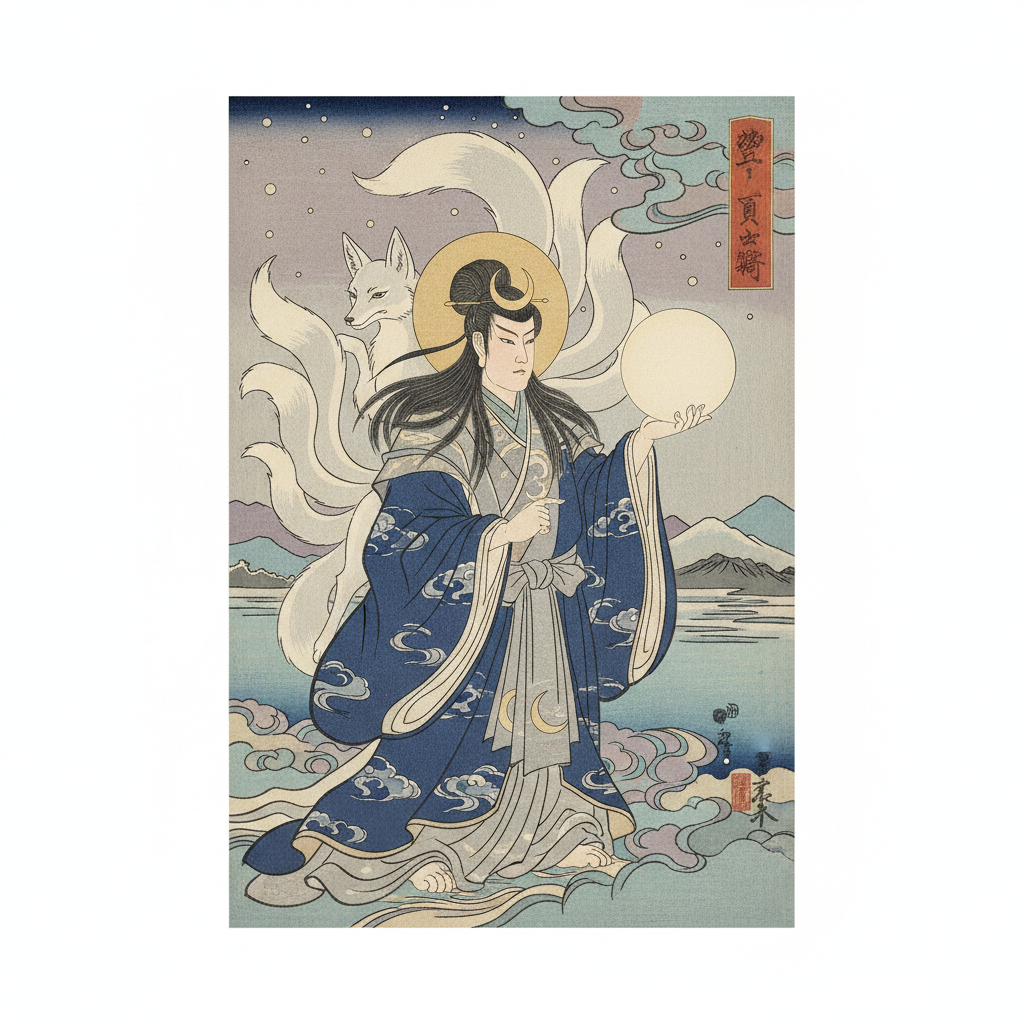
Kitsune are supernatural fox spirits in Japanese folklore. They grow more powerful with age, gaining additional tails up to a maximum of nine. A nine-tailed fox (kyubi no kitsune) has near-divine power. Kitsune can be benevolent (zenko, associated with the god Inari) or mischievous (yako, wild tricksters). Their most famous ability is shapeshifting into human form, usually appearing as beautiful women. Kitsune stories are among the most popular and enduring in all Japanese folklore.
What is the difference between Shinto and Buddhism in Japanese culture?
Shinto and Buddhism have coexisted in Japan for over 1,400 years, often blending together. Generally, Shinto governs matters of life, fertility, and the natural world (births, weddings, seasonal festivals, nature worship), while Buddhism addresses death, the afterlife, and philosophical questions about suffering and enlightenment (funerals, ancestor memorials, temple worship). Many Japanese participate in both traditions without seeing a contradiction. This coexistence created unique syncretic forms, though the Meiji government briefly attempted to separate them in the 19th century.
What are onryo and why are they so feared?
Onryo are vengeful ghosts in Japanese folklore, spirits of the dead who return to the living world driven by powerful negative emotions like jealousy, hatred, or grief. They are almost always female. Unlike other ghosts, onryo actively seek to cause harm, bringing disease, natural disasters, or death to those who wronged them and sometimes to bystanders. Famous onryo include Oiwa (from the kabuki play Yotsuya Kaidan) and Okiku (from the well-counting ghost story Bancho Sarayashiki). The onryo tradition directly inspired modern Japanese horror films like Ringu and Ju-On.
What is the significance of foxes in Japanese culture?
Foxes hold a unique dual status in Japanese culture. As kitsune, they are feared as tricksters and shapeshifters. But as messengers of Inari, the god of rice and prosperity, they are revered protectors. Stone fox statues guard the entrances to over 30,000 Inari shrines across Japan. Offerings of fried tofu (aburaage) are left at shrines because foxes are believed to love it. This duality, simultaneously sacred and dangerous, reflects the Japanese understanding of spiritual power as inherently ambiguous.
What is Obon?
Obon (also called Bon) is a Japanese Buddhist festival honouring the spirits of ancestors. Held in mid-August (or July in some regions), it is one of Japan's most important cultural events. Families return to their hometowns, visit and clean ancestral graves, and light fires to guide spirits back home. Bon Odori (folk dances) are performed, and paper lanterns are floated on rivers to guide the spirits back to the afterlife at the festival's end. Obon is effectively Japan's equivalent of Mexico's Day of the Dead.
What are tsukumogami?
Tsukumogami are objects that have come to life after reaching 100 years of age. According to Japanese folk belief, any object that reaches this age acquires a soul and can animate itself. This includes tools, instruments, umbrellas, sandals, and household items. Tsukumogami are usually mischievous rather than dangerous. The belief reflects the Shinto principle that everything in the world possesses spiritual essence (kami), even man-made objects. It also served as a practical reminder to treat possessions with respect.
How has Japanese folklore influenced modern pop culture?
Japanese folklore has had an enormous impact on global pop culture. Anime and manga regularly draw on yokai, kami, and mythological themes (Naruto, InuYasha, Spirited Away, Mononoke). Video games feature Japanese mythology extensively (Okami, Persona, Shin Megami Tensei, Pokemon). Japanese horror films (J-horror) brought onryo ghosts to worldwide audiences through Ringu and Ju-On. Kitsune masks, tanuki statues, and Inari shrine imagery have become globally recognised symbols of Japanese culture.
What is the significance of Mount Fuji in Japanese mythology?
Mount Fuji is considered a sacred site in both Shinto and Buddhist traditions. In Shinto, it is the dwelling place of the goddess Konohanasakuya-hime (princess of flowering trees). Buddhist traditions associate it with Dainichi Nyorai (the cosmic Buddha). Fuji has been a pilgrimage destination for centuries, and climbing it was considered a religious act. The mountain's perfect symmetrical cone shape made it a symbol of natural beauty and spiritual perfection, and it has been depicted in countless works of Japanese art, most famously in Hokusai's ukiyo-e woodblock prints.